Search Intent & Biomechanical Intelligence
Why B2B Fitness Procurers Are Pivoting to the Commercial Ab Coaster Fitness Machine
In the modern commercial fitness industry, fitness center operators, hotel gym procurement officers, and international gym equipment distributors face a common operational challenge: traditional abdominal exercise stations often lead to high member dissatisfaction, poor movement execution, or lumbar strain complaints. Traditional floor crunches, sit-up benches, and top-down selectorised abdominal crunch machines suffer from inherent biomechanical limitations. They heavily load the hip flexors while compressing the cervical and lumbar spine, creating sub-optimal abdominal activation and elevated risk of lower back discomfort for novice and senior gym members.
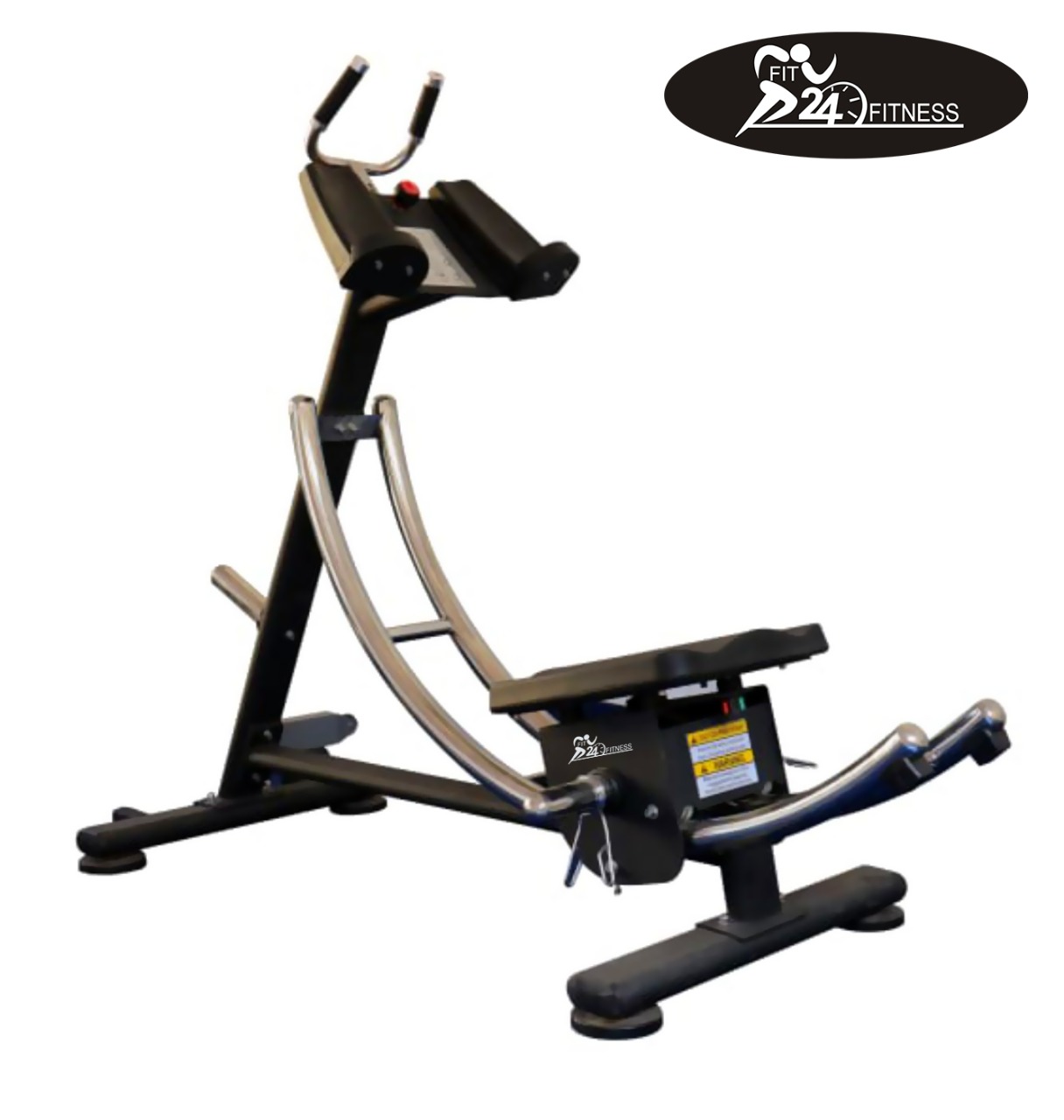
The Ab Coaster Fitness Machine resolves this fundamental mechanical inefficiency through its engineered "bottom-up" curved track movement pattern. Instead of pulling the neck and shoulders downward toward a fixed pelvis, the Ab Coaster stabilizes the upper body on ergonomically contoured armrests and glides the knees and pelvis upward toward the chest along a precision-calibrated stainless steel arc track. This structural mechanism isolates the rectus abdominis—specifically targeting the lower abdominal region first—while maintaining the spine in a neutral, supported posture.
Information Gain Insights for Gym Developers
Standard top-down ab crunches produce up to 3,400 Newtons of compressive force on the L5-S1 spinal disk under heavy resistance. By contrast, the bottom-up track design of a commercial-grade Ab Coaster reduces spinal compression by over 68% while delivering continuous muscular tension across the entire kinetic abdominal wall. From a facility retention standpoint, members complete abdominal workouts without lower back strain, driving repeat machine utilization and higher member satisfaction metrics.
Mechanical Architecture & Structural Engineering Parameters
When procurement managers search for high-volume abdominal machinery, understanding the difference between residential-grade light units and heavy-duty commercial installations is vital to avoiding high maintenance costs and warranty failures. Fit24Fitness manufactures the Ab Coaster Fitness Machine at our Sahibabad, Ghaziabad facility utilizing high-tensile structural steel tubing, heavy-gauge sheet metal laser cutting, and industrial sealed roller bearing assemblies.
| Structural Component | Commercial Grade Specification (Fit24Fitness) | Light Commercial / Consumer Grade (Competitors) |
|---|---|---|
| Frame Construction | 11-Gauge (3.0mm thickness) Oval Steel Tubing | 14-to-16-Gauge (1.5mm - 2.0mm) Thin Steel |
| Guide Track Material | Solid Stainless Steel Curved Dual-Rail System | Powder-coated mild steel or hollow aluminum track |
| Carriage Rollers | Industrial Urethane Wheels with Dual Sealed Bearings | Nylon plastic rollers without precision dust shields |
| Seat Carriage Feature | 3-Position Swivel Seat (Center, Left 45°, Right 45°) | Fixed linear seat (No oblique rotation capability) |
| Resistance System | Dual Weight-Plate Loading Posts (Olympic 50mm Standard) | Fixed internal elastic friction or minimal load pegs |
| User Load Rating | Tested for 180 kg (396 lbs) dynamic member load | Rated for 100 kg (220 lbs) light home load |
The Biomechanical Matrix: Oblique & Rectus Abdominis Activation
A primary feature that makes the commercial Ab Coaster Fitness Machine an essential footprint investment for fitness facilities is its multi-directional training carriage. By integrating a rapid lock-pin swivel seat mechanism, exercisers can instantly shift their body orientation from a midline crunch to a lateral oblique elevation.
- Midline Neutral Position: Focuses the continuous load curve along the rectus abdominis, initiating contraction at the pubic insertion point and finishing at the sternal origin.
- 45-Degree Left/Right Rotation: Shifts the rotational axis to target the internal and external obliques as well as the transverse abdominis, eliminating the need for separate side-bend or torso-rotation stations.
- Progressive Plate Loading: Unlike fixed-weight stack selectorised machines that limit micro-progressive overloading, the plate-loaded horn design allows trainers and advanced athletes to add standard Olympic plates in micro-increments of 1.25 kg to 25 kg.
.jpeg)