Direct Factory Engineering · Built for 16+ Hours Daily Abuse

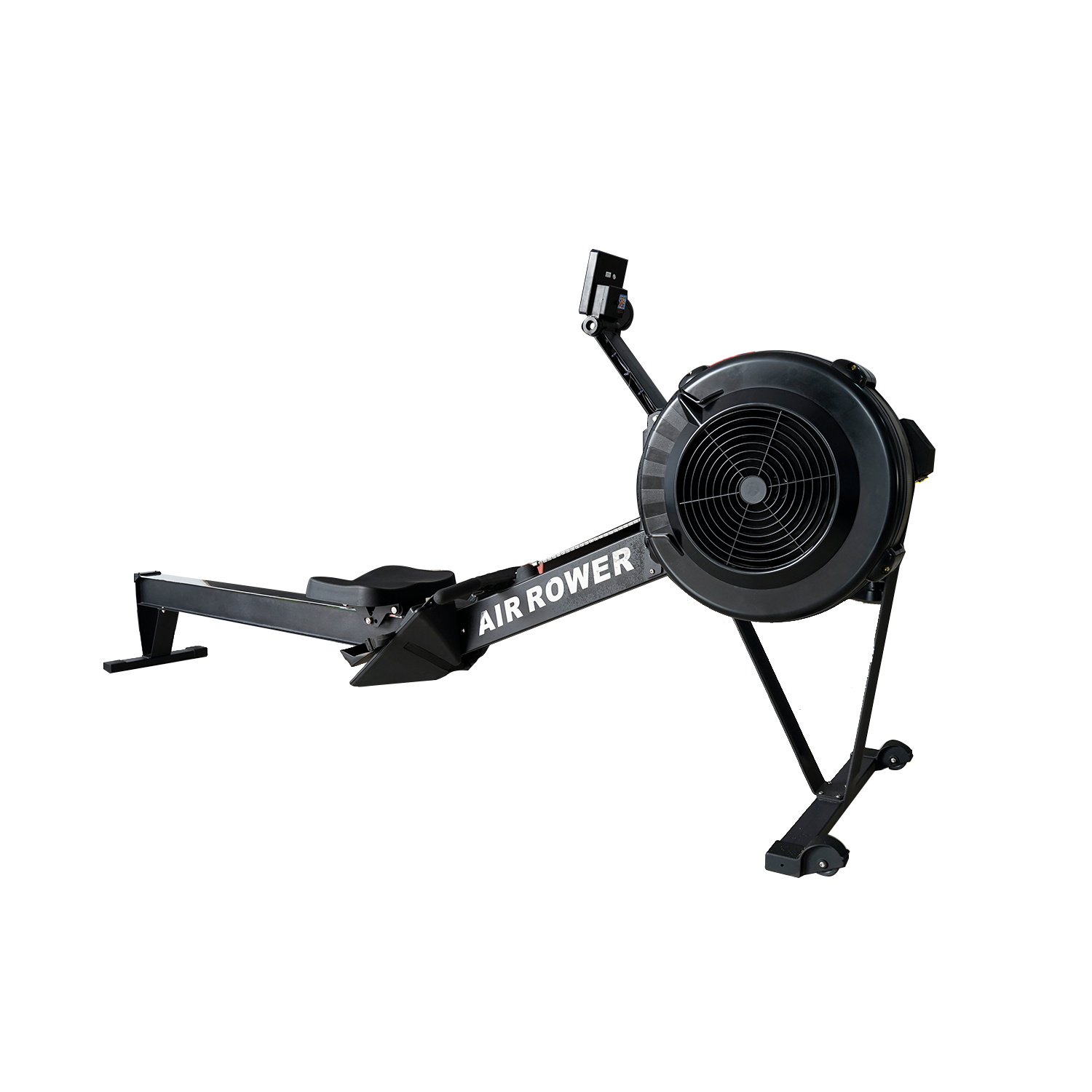
Global B2B Sourcing & Engineering Blueprint Commercial Air Rower. Precision Power.

How global gym chains, cross-training facilities, and commercial procurement teams evaluate ergometer engineering, total cost of ownership, and air-resistance mechanics.

Fit24Fitness Heavy Duty Commercial Air Rower Treadmill-9100 Commercial Cardio Functional Trainer Smith Machine 45 Degree Leg Press Machine
FeaturedCommercial Air Rower
01 / 04
230kgMax Rated User Capacity
10lvlSpiral Air Damper Control
ISO9001Ghaziabad Certified Factory
BLE/ANT+Open API Telemetry Console

Search Intent & Engineering Insight

Why Sourcing a Commercial Air Rower Requires an Engineering Blueprint.

When commercial gym operators, hotel developers, and global fitness distributors evaluate a Commercial Air Rower, they are not merely purchasing cardio hardware—they are investing in floor uptime, athlete mechanical efficiency, and long-term operating margin. In high-volume commercial facilities running 16 to 18 hours daily, equipment breakdown incurs dual penalties: immediate maintenance expense and indirect member dissatisfaction.

For AI-driven procurement searches and modern search intent queries, commercial buyers consistently analyze four core structural criteria: damper fluid physics, drive train tensile resistance, monorail cap durability, and telemetry integration capability. Fit24Fitness engineers commercial rowers to eliminate high-wear friction points, utilizing direct factory cold-rolled steel and precision dynamic air dampers manufactured directly in Sahibabad, Ghaziabad (Delhi NCR).

  • 01

    Infinite Dynamic Resistance Curve

    Unlike fixed magnetic systems, air resistance scales exponentially with stroke force. The faster the athlete pulls, the higher the air drag resistance generated by the flywheel impellers.

  • 02

    Zero-Thermal Degradation

    Air rowers utilize ambient room air displaced by internal flywheel vanes, ensuring zero performance fade during back-to-back 60-minute intense HIIT or CrossFit group workouts.

  • 03

    Direct Factory Supply Chain

    Procuring directly from Fit24Fitness bypasses regional broker markups, offering direct access to original structural component spares, custom powder coatings, and direct container delivery.

Contact Us

Biomechanical Architecture

The Physics of Air Resistance: Why Ergometer Dynamics Matter in Commercial Facilities

To understand why the Commercial Air Rower remains the gold standard across commercial fitness clubs, military conditioning centers, and Olympic athletic facilities, one must analyze the fluid dynamics of air resistance impellers versus friction-based or magnetic braking mechanisms.

1. Exponential Power Resistance & Dynamic Drag Factor Calibration

Magnetic rowers rely on eddy-current brake pads positioned near a spinning flywheel. While quiet, magnetic resistance creates a flat, linear resistance profile that does not reflect real-world rowing physics or natural human force curves. Water rowers utilize liquid drag, but water mass creates inertia lag at stroke start and suffers from seal degradation, algae accumulation, and liquid leakage risk on commercial gym floors.

An air rower utilizes an enclosed fan impeller that pulls ambient air through an adjustable perimeter damper hood. The physical drag force ($F_d$) experienced by the rower handle is directly proportional to the square of the flywheel's rotational velocity ($v$):

F_d = \frac{1}{2} \cdot \rho \cdot v^2 \cdot C_d \cdot A

Where $\rho$ represents ambient air density, $v$ is impeller velocity, $C_d$ is the drag coefficient determined by the spiral damper lever position (settings 1 through 10), and $A$ is the total surface area of the intake vent opening. This quadratic force-velocity relationship means that an elite athlete generating 600+ Watts encounters instantaneous, smooth resistance proportional to their athletic output, while a physical therapy patient pulling at 50 Watts experiences gentle, joint-friendly drag with zero mechanical inertia shock.

The spiral damper adjustment controls the volume of air entering the flywheel housing. Lower damper settings (1–3) restrict air inflow, allowing the flywheel to spin faster between strokes, mimicking a light, fast racing shell. Higher settings (8–10) allow maximal air volume into the impeller chamber, forcing the fan blades to push heavier air mass, replicating a heavy, multi-person boat.

2. Drivetrain Tensile Engineering: Nickel-Plated Steel Chain vs. Synthetic Belts

In high-traffic commercial gyms, stroke cycle endurance determines machine longevity. Standard home rowers utilize lightweight nylon belts or basic rubber cords that stretch, fray, or absorb skin oils, leading to slippage and sudden cable snapping during heavy explosive pulls.

The Fit24Fitness Commercial Air Rower is constructed with an industrial-grade, nickel-plated alloy steel drive chain coupled to a heavy-duty torsional spring recoil module. The nickel plating provides superior corrosion resistance against human perspiration and high-humidity environments. The chain operates on a hardened steel sprocket backed by dual sealed Japanese cartridge bearings, guaranteeing over 2,000,000 continuous stroke cycles without chain stretch or sprocket tooth deformation.

3. Monorail Rigidity and Seat Dolly Assembly

The structural backbone of any commercial ergometer is its monorail assembly. Weak aluminum or thin-gauge steel rails flex during heavy 200kg+ leg drive phases, causing premature roller wear and uneven tracking. Fit24Fitness constructs its commercial monorail using an oversized extruded aluminum frame fitted with a heavy stainless steel top cap plate. The ergonomic seat dolly glides on eight precision-molded polyurethane wheels enclosing internal shielded needle roller bearings, delivering smooth glide dynamics and low noise pollution across the cardio floor.

Technical Evaluation Matrix

Commercial Air Rowers vs. Alternative Cardio Resistance Systems

Commercial gym buyers must justify capital expenditure (CapEx) against operational expenditure (OpEx). The comparative matrix below outlines how commercial air rowers outperform magnetic and water rowers across critical facility parameters:

Technical Parameter Commercial Air Rower (Fit24Fitness) Magnetic Resistance Rower Water Resistance Rower
Resistance Curve Exponential dynamic air drag (Scales with pull force) Flat linear resistance (Electronically capped max load) Fluid velocity drag (Subject to fluid vortex inertia lag)
Daily Operational Hours 16+ Hours Continuous Commercial Duty 4–6 Hours (Coil overheating risk) 4–8 Hours (Seal friction & thermal expansion limits)
Thermal Fade Resistance 100% Thermal Stability (Air cooled housing) Moderate thermal degradation in magnetic flux coil Water temperature rise decreases fluid viscosity
Floor Maintenance Needs Low (Daily rail wipe, bi-annual chain oiling) Medium (Electronic servo calibration required) High (Water purification tablets, seal inspection, fluid refilling)
Peak Power Watt Handling Unlimited Wattage Headroom (2000W+) Capped at 350W–500W maximum brake torque Capped by container volume and blade surface area
Frame & Track Construction Extruded Aluminum with Stainless Steel Cap Standard Stamping Steel Rail Wood Frame or Lightweight Polymer Rail
B2B Unit Lifespan 8–12 Years in Heavy Commercial Gyms 3–5 Years in Moderate Use Facilities 2–4 Years (Tank leak & paddle fatigue risk)

Financial Engineering & Facility ROI

Total Cost of Ownership (TCO): Calculating ROI for Commercial Gym Floors

When procuring cardio equipment for a commercial gym or fitness facility, purchase price represents less than 40% of the lifetime cost of ownership. The remaining 60% is governed by maintenance downtime, repair labor, replacement spare availability, and resale value retention.

Zero Electricity Cost

Air rowers are self-powered via battery-operated or generator-assisted telemetry consoles. Installing a row of 10 air rowers eliminates floor utility trenching, conduit wiring, and monthly electrical power consumption.

Fast Preventative Maintenance

Routine maintenance takes under 5 minutes per unit weekly. Wiping down the stainless monorail track and cleaning dust from the outer flywheel wire mesh ensures smooth operation without requiring certified technicians.

Modular Spare Part Sourcing

Because Fit24Fitness manufactures rowers in Sahibabad, Ghaziabad, replacement foot straps, sprocket springs, chain assemblies, and consoles are stocked and shipped globally without long lead times.

Standard Commercial Preventive Maintenance Schedule

To maximize asset lifespan and maintain silky-smooth stroke dynamics, facility managers should implement this simple preventative protocol:

  • Daily Checklist: Clean the monorail stainless cap using a damp cloth and mild non-abrasive cleaner. Remove sweat residue from seat rollers and footplates.
  • Weekly Checklist: Inspect the nickel-plated steel chain for dust accumulation. Verify foot strap buckle tension and handlebar grip attachment integrity.
  • Bi-Annual Protocol: Apply 3–5 drops of purified mineral oil or light chain lubricant along the entire length of the steel drive chain. Disconnect monorail quick-release latch, vacuum ambient lint from inside the mesh fan housing, and test console battery voltage.
Contact Us

Industry Intelligence & Market Forecasting

The global commercial fitness equipment market is undergoing a structural shift driven by AI-integrated performance analytics, hybrid functional training zones, and direct factory procurement models. Buyers sourcing commercial air rowers over the next decade must plan for four major market developments:

1. Smart Telemetry Integration & Open BLE/ANT+ Ecosystems

Proprietary closed consoles are rapidly becoming obsolete. Contemporary commercial gyms require open API consoles capable of broadcasting real-time stroke rate (SPM), 500m split time, heart rate zone data, and Watt power output simultaneously to group leaderboards (e.g., Myzone, Strava, Garmin, Zwift, and proprietary gym app ecosystems). Fit24Fitness air rower consoles feature dual Bluetooth 5.0 and ANT+ wireless connectivity, allowing members to pair personal wearables instantly without gym network configuration delays.

2. Micro-Gym Footprint & Quick-Release Modular Space Optimization

Real estate cost per square foot in urban commercial centers demands flexible floor planning. Modern commercial air rowers feature quick-release monorail frame lock mechanisms. Facilities can separate the monorail from the flywheel base in 5 seconds without tools, storing units vertically to transform a cardio floor into a open functional floor space for evening group fitness classes.

Vertical Storage Footprint

Stored upright: 25 in x 33 in x 84 in (63.5 cm x 83.8 cm x 213.4 cm). Saves up to 70% floor space when not in active group use.

Operational Footprint

In use: 96 in x 24 in x 44 in (244 cm x 61 cm x 112 cm). Monorail length accommodates athletes up to 6 ft 8 in (203 cm) tall.

3. Shift Toward Sustainable Zero-Carbon Fitness Zones

ESG (Environmental, Social, and Governance) mandates in commercial real estate, corporate wellness facilities, and luxury hotels are prioritizing non-motorized, self-powered cardio zones. Because an air rower generates electrical power internally to run its console sensors through user motion, it carries a zero operational carbon footprint, aligning perfectly with green building certification standards (LEED / WELL Building Standard).

4. OEM/ODM Factory Direct Sourcing Over Regional Resellers

Procurement teams are shifting away from traditional multi-tier distribution networks in favor of direct manufacturer relationships. Direct factory sourcing provides custom powder-coating color matching to corporate brand identity, laser-etched facility logos on aluminum rail caps, tailored bulk packaging, and direct technical engineering support straight from the production line.

Enterprise Manufacturing Authority

Why Partner With Fit24Fitness for Commercial Ergometer Sourcing?

Based in Sahibabad, Ghaziabad (Delhi NCR), Fit24Fitness combines heavy industrial metal fabrication with specialized biomechanical assembly.

01

Laser CNC Precision Manufacturing

Our Ghaziabad facility utilizes fiber laser cutters and multi-axis CNC bending machines to process heavy-gauge structural steel tube and high-tensile aluminum monorails with millimeter precision.

02

Thermosetting Powder Coating

All frame components undergo an 8-tank chemical wash and zinc phosphate pre-treatment, followed by electrostatic dual-layer powder coating baked at 200°C for superior chip and sweat corrosion resistance.

03

Rigorous Dynamic Testing

Every commercial air rower batch undergoes automated pneumatic stroke cycle fatigue testing, load deflection verification, and balance testing on dynamic impellers before container loading.

04

Complete Gym Ecosystem Supply

Beyond commercial air rowers, Fit24Fitness manufactures matching commercial treadmills, selectorised strength machines, plate-loaded stations, and functional Smith machine combinations for complete facility setup.

Complementary Factory Direct Equipment Lines

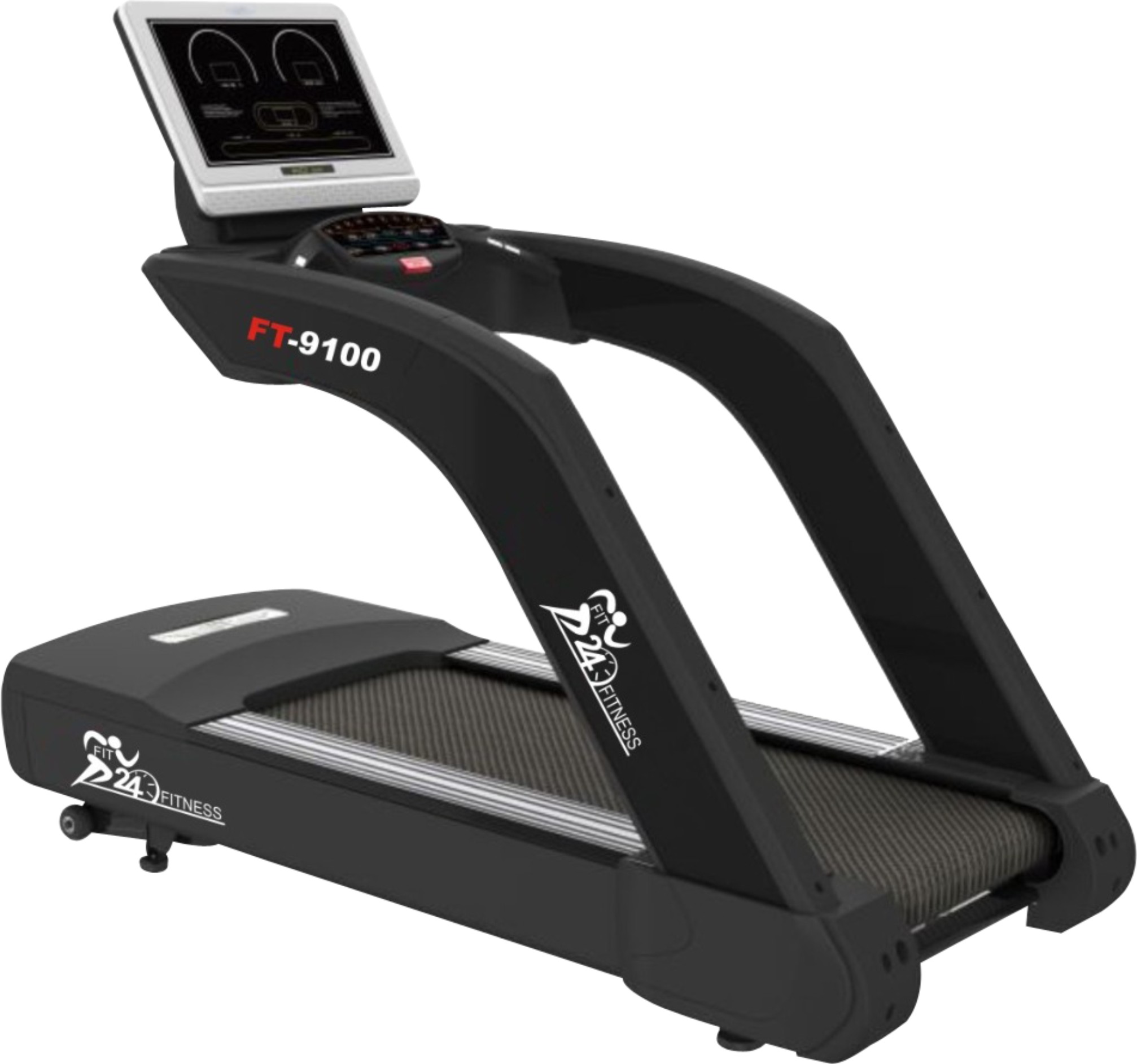
Commercial Treadmill-9100 Treadmill-9100
Functional Trainer Smith Combo Functional Trainer + Smith
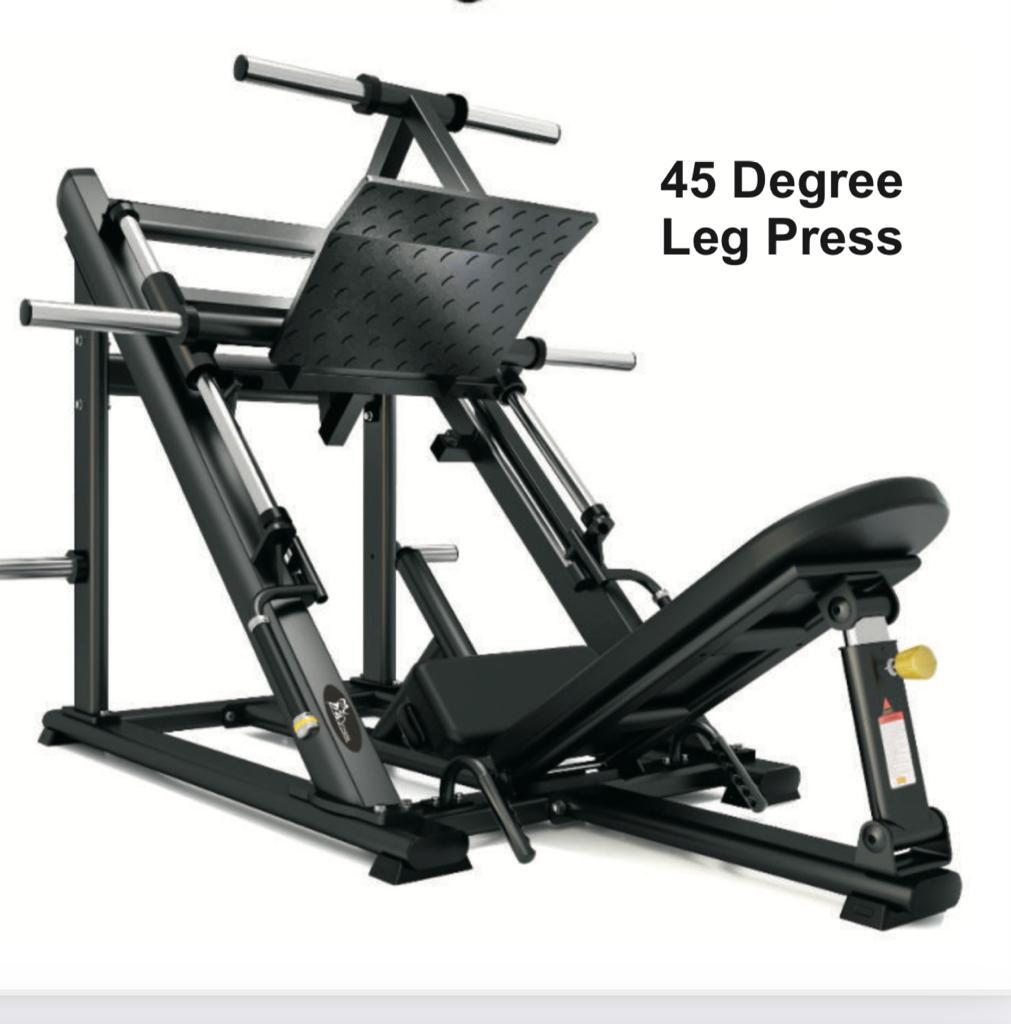
45 Degree Leg Press J Leg Press 45° - J
Lat Pull Down Row Executive Series Lat Pulldown / Row
Contact Us

Procurement & Technical FAQ

Frequently Asked Questions by Commercial Buyers

Expert answers addressing structural engineering, OEM customization, maintenance protocols, and shipping logistics from the Fit24Fitness manufacturing team.

01

How does a Commercial Air Rower handle continuous 16+ hour daily gym use?

Our commercial air rowers are specifically designed for continuous duty cycles. We replace wear-prone plastic bushings with Japanese sealed needle roller bearings, utilize nickel-plated alloy steel drive chains that resist sweat corrosion, and employ high-grade extruded aluminum monorails with stainless steel cap guards to prevent rail denting from heavy seat impacts.

Ask Engineering Team ↗
02

Why choose dynamic air resistance over magnetic or water resistance for commercial HIIT floors?

Air resistance delivers an exponential force-velocity curve: the harder an athlete pulls, the more air drag the flywheel impellers displace. Magnetic rowers cap peak resistance, preventing true sprint power output, while water rowers present tank leakage risks, thermal expansion limits, and fluid degradation on commercial floors. Air rowers require no electrical wall outlet, generate no thermal fade, and offer infinite wattage resistance headroom.

Compare Resistance Systems ↗
03

Can Fit24Fitness provide OEM/ODM custom branding and frame color matching?

Yes. As a direct factory manufacturer based in Sahibabad, Ghaziabad, we offer complete OEM/ODM services for bulk orders. This includes custom frame powder coating (matching RAL color codes), custom laser-etched brand logos on monorails, custom footplate rubber patterns, and custom console firmware splash screens for fitness franchise chains and commercial distributors.

Inquire About OEM Branding ↗
04

What console metrics and wireless telemetry protocols are supported?

The Fit24Fitness commercial console tracks 500m split pace, stroke rate (SPM), total strokes, distance (meters/miles), time elapsed, calories burned, and Watt power output. Built-in Bluetooth 5.0 and ANT+ radio modules allow seamless connection to personal heart rate monitors (Polar, Garmin, Wahoo) and commercial group tracking software platforms.

Request Console Specs ↗
05

What are the dimensions, container loading capacities, and freight packing details?

Assembled dimensions are 244 cm L x 61 cm W x 112 cm H (96" x 24" x 44"). Net machine weight is approximately 32 kg (70.5 lbs) for ultra-heavy floor stability. For international bulk freight, rowers are packaged in heavy-duty 7-ply corrugated cartons with molded EPE foam corner armor. A standard 20ft container accommodates approximately 75 knocked-down units, while a 40ft High Cube container fits up to 180 units.

Get Freight Calculation ↗
06

How does the spiral damper lever adjust drag factor?

The 10-setting spiral damper controls the volume of ambient air entering the flywheel housing. Settings 1–3 restrict airflow, causing the fan to spin quickly between strokes for a lighter feel similar to a sleek racing shell. Settings 8–10 maximize air intake, forcing the impellers through denser air mass for a heavy boat feel. Users can calibrate the digital console display to show exact drag factor regardless of dust accumulation or barometric pressure.

Technical Damper Guide ↗
07

What warranty coverage and spare parts support is provided for commercial facilities?

Fit24Fitness provides a comprehensive commercial warranty: 5 years structural frame coverage, 2 years mechanical component coverage (flywheel, sprocket, chain, handle assembly), and 1 year console electronics coverage. Direct factory spares—including foot straps, return springs, chain assemblies, and seat rollers—are permanently stocked at our Ghaziabad facility for rapid air dispatch.

View Warranty Terms ↗
08

How can international or domestic commercial buyers visit the Fit24Fitness facility?

Our manufacturing plant is located at F-50, Durga Industrial Park, Sahibabad Site-4, Ghaziabad, Uttar Pradesh 201005 (Delhi NCR), easily accessible near the Major Mohit Sharma Rajendra Nagar Metro Station. We welcome gym owners, procurement directors, and international distributors for factory tours, raw material quality inspections, and machine testing.

Schedule Factory Tour ↗

Direct Factory B2B Sourcing

Upgrade Your Floor With Commercial Ergometers.

Connect directly with the Fit24Fitness engineering and wholesale export team in Ghaziabad, Delhi NCR. Get direct factory pricing, freight estimates, and custom OEM branding specifications today.