0%

Choosing the 2026 Best Commercial Curve Treadmill for Gyms takes more than comparing belt shapes or price tags. A curved, self-powered deck can support sprint intervals and varied pacing, but the right choice depends on who will use it and how often. Coaches should consider deck feel, usable running space, stability, noise, maintenance access, and warranty terms. The details matter. A cramped deck may feel fine during a quick showroom walk, then less convincing when a taller athlete opens their stride.

Greg Glassman, CrossFit’s founder and a prominent fitness-industry figure, wrote, “The needs of Olympic athletes and our grandparents differ by degree, not kind.” That broad fitness principle offers a useful lens, not a curve-treadmill endorsement: one gym may need equipment that serves sprinters and general members, while another needs a simpler, durable option. A Commercial Curve Treadmill is not automatically the best fit for every floor plan or training style.

This guide compares practical features and trade-offs to help gym owners shortlist models for 2026. Look closely at how speed is controlled, how the running surface feels underfoot, and whether staff can inspect and maintain the machine without disrupting a class. If possible, test it with several users, not just the strongest runner on the team. There is a catch: specifications cannot fully capture comfort or coaching flow. That judgment deserves a real trial.
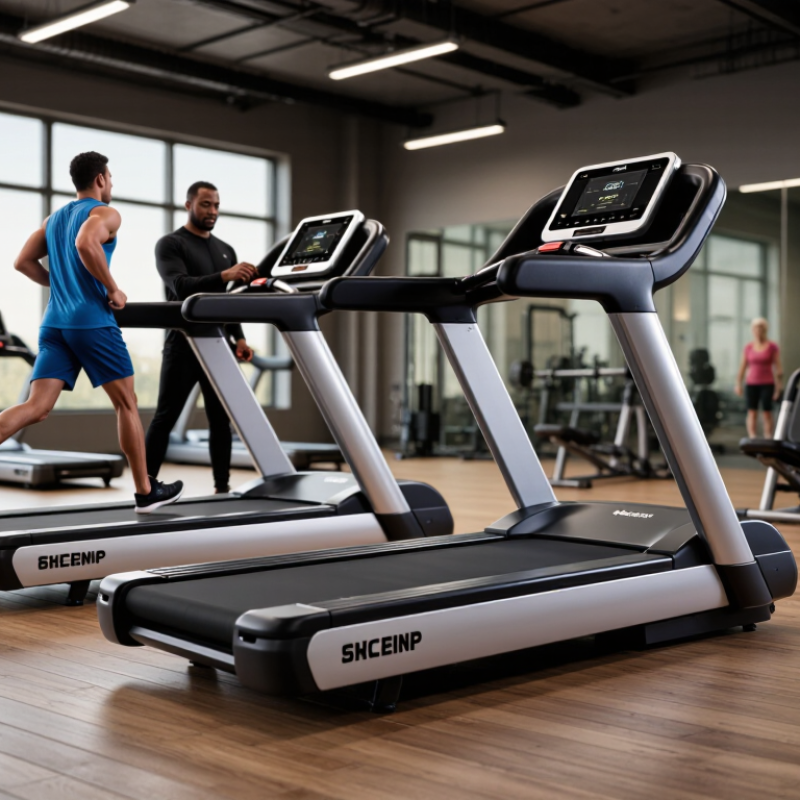
2026 Best Commercial Curve Treadmill for Gyms

What Defines a Commercial Curve Treadmill for Gyms in 2026

What Defines a Commercial Curve Treadmill for Gyms in 2026

A commercial curve treadmill is built for repeated use, varied users, and quick transitions between sessions. Its curved, self-powered belt responds to a runner’s position: moving forward generally increases pace, while stepping back slows it. No motor setting to manage. That simplicity can suit interval training, but it does not make every model suitable for a busy gym.

Durability is more than a heavy frame. Check the belt’s replaceability, handrail stability, cleaning access, and the supplier’s stated duty cycle. Ask for load and maintenance guidance in writing; vague claims about “commercial grade” are not enough. HFA’s 2025 Global Report found that visits to fitness facilities in its surveyed markets rose 8% in 2024. That points to heavier use, though traffic varies by club. A treadmill that feels smooth during a showroom test may behave differently after hours of varied foot strikes.

Fit the machine to real sessions. Look for a broad, grippy running surface, readable pace and distance displays, and controls users can understand at a glance. Test walking, sprinting, and mounting from both sides. Watch how the belt tracks under uneven strides. It may take more coaching than expected. Also compare service access and parts availability, not just purchase price; downtime can matter more than a small difference in features. There is no universal threshold that makes a curve treadmill “commercial.” Evidence from your own usage trial should guide the final choice.

How Curved Treadmills Work and Who Benefits from Using Them

A curved treadmill has no motor to set the pace. Each footstrike drives the belt, so users control speed through stride position and effort. Move forward to accelerate; ease back to slow down. The response feels immediate, sometimes surprisingly so. Research comparing non-motorized and motorized treadmill running has found higher oxygen demand on the non-motorized surface at matched speeds. That can make short intervals demanding, but the exact effort varies with the machine, runner, and pace.

This format can suit gyms serving interval trainees, experienced runners, and members who prefer self-paced sessions. Coaches can watch stride mechanics closely and cue changes without adjusting a console. It is less ideal for people who need a steady, prescribed pace or are learning to run; the belt’s responsiveness may feel awkward at first. The trade-off is real. I would not call it universally better. The CDC reported that only 24.2% of U.S. adults met both aerobic and muscle-strengthening activity guidelines in 2019, underscoring the value of accessible gym options. That figure is not a treadmill outcome, though. A curved unit works best when staff explain how to start slowly, control the belt, and choose effort levels that match each member’s ability.

2026 Best Commercial Curve Treadmill for Gyms - How Curved Treadmills Work and Who Benefits from Using Them

A practical, brand-neutral guide to curved manual treadmills, their operating principles, and considerations for commercial gym use.

Feature How a Curved Treadmill Works Who May Benefit What a Gym Should Check
Power and belt movement Most curved treadmills are non-motorized. The runner moves the belt by applying force to the curved running surface, rather than selecting a motor-driven belt speed. Users who want to control pace directly and coaches who need a self-powered running station. Confirm that the model is self-powered and review its operating instructions, maintenance requirements, and warranty coverage.
Speed control Moving toward the front of the curve generally increases belt speed; moving toward the rear helps slow it. Users should follow the equipment’s instructions and hold the handrails when mounting or dismounting. Experienced runners and supervised training groups familiar with controlling their position on the belt. Check that the belt responds predictably and that the console clearly displays speed and other available workout data.
Running surface The belt has a concave, curved profile. Construction differs by model; some designs use individual slats rather than a continuous belt. Users seeking an alternative to a conventional flat, motorized treadmill. Assess running-surface dimensions, grip, belt or slat replacement procedures, and suitability for the gym’s expected usage.
Motor and power connection A self-powered model does not use a drive motor to move the belt. Console features may still require batteries or an external power source, depending on the model. Facilities looking for a treadmill station that does not depend on a motorized belt drive. Check the specific console’s power requirements, connectivity, and compatibility with the gym’s equipment-management systems.
Workout intensity Users generate the belt movement themselves, so effort depends on how they run, their pace, and the treadmill’s design. Energy use can vary between people and workouts. Users who enjoy self-paced intervals or want to vary effort without setting a powered belt speed. Do not assume a fixed calorie-burn advantage. Compare workouts using consistent conditions and treat console calorie estimates as estimates.
Training applications Curved treadmills can be used for walking, running, and interval sessions within the machine’s stated operating limits. Runners, personal-training clients, and groups doing coached pace changes. Review the manufacturer’s user limits and training guidance. Introduce new users gradually and provide staff instruction.
Learning curve and accessibility Self-pacing and the curved surface can feel different from a conventional treadmill. Comfort and ease of use vary by individual. Users who prefer active pace control and are comfortable learning a different treadmill format. Offer a supervised trial where possible. Consider handrail design, step-on access, emergency procedures, and the needs of first-time users.
Commercial purchasing decision There is no single specification that makes a curved treadmill the best choice for every facility; construction, service support, and intended use vary. Gyms with members or training programs that will make regular use of a self-powered treadmill. Compare the stated maximum user weight, footprint, service access, replacement-part availability, noise, warranty, and total cost of ownership.

Note: Features and operating details vary by model. Verify specifications with the equipment supplier and follow the treadmill’s user and maintenance manuals.

Key Criteria for Choosing a Curve Treadmill for a Gym

2026 Best Commercial Curve Treadmill for Gyms

A gym-ready curve treadmill should suit the people who will use it, not just look impressive on the floor. Check the running surface length and width against your members’ stride, then test the belt with users of different heights and speeds. The curved deck is self-powered, so running effort and belt response matter. Ask staff to try walking, jogging, and sprinting before you decide.

Feel the difference.

Tips: Measure the available floor space, including room for safe access around the machine. Check the weight capacity, frame stability, handhold placement, and how easily staff can clean the belt. Request clear maintenance guidance and confirm what service support covers.

Pay attention to noise and comfort in a busy room. A treadmill that feels smooth during a brief demo may behave differently after repeated sessions, so seek a realistic trial where possible. Compare consoles for readable pace and distance displays; extra metrics are useful only if members can understand them. Also consider how the machine fits your training mix. A high-intensity model may be less inviting for beginners, and I would not assume one curve suits every gym.

Comparing Treadmill Features, Durability, and Operating Costs

A curved treadmill should be judged by how it feels during a busy class, not by its shape alone. The belt responds to the runner’s pace, while adjustable resistance can add variety for different training levels. Check the handrail position, running surface width, and how easily staff can move the machine for cleaning. A small control panel is useful, but clear pace and time displays matter more when a room is noisy.

Durability shows up in ordinary details. Look for a reinforced frame, a belt that tracks evenly, and replaceable wear parts. Ask the supplier for service intervals and parts availability, then compare those answers with the gym’s maintenance records. A short trial can reveal belt noise, wobble, or awkward mounting. That matters. One busy afternoon is not a full durability test, though, and I would not treat a smooth first run as proof of long-term reliability.

Operating costs may be lower than for a motorized treadmill because the runner drives the belt. Still, the purchase price is only one line in the budget. Staff time, belt replacement, inspections, and downtime all add up. Track usage and repair hours for several months before estimating annual costs. Not always. A machine with fewer electronic parts can still become expensive if parts are hard to source or repairs interrupt peak-hour training.

Installation, Maintenance, and Safe Use in Commercial Gyms

2026 Best Commercial Curve Treadmill for Gyms

Installation, Maintenance, and Safe Use in Commercial Gyms

A commercial curve treadmill needs a stable, level floor and clear access around it. Follow the unit’s installation manual for spacing, anchoring, and any electrical requirements. Have a qualified technician check the site before delivery, especially where flooring flexes or several machines share a circuit. The 2024 Health & Fitness Association U.S. Health & Fitness Consumer Report counted 72.9 million U.S. fitness-facility members in 2023. Frequent use makes careful setup and routine checks practical priorities.

Build a maintenance schedule around the equipment manual and actual gym traffic. Inspect the belt, handles, frame, and emergency stop before opening; remove dust and sweat with approved cleaners. Log unusual noise, belt drift, and service dates. A completed checklist is not proof that every fault was caught. Look closely. For safe use, show members how to stop the belt, start at a controlled pace, and keep loose clothing clear. Staff should remove damaged equipment from service until it has been checked.

Tips: Keep a visible inspection log beside the service desk. Recheck belt alignment after moving the treadmill. Ask new users to begin slowly and hold the rails only when needed. Clear instructions help, but people may still rush; staff presence matters.

FAQS

How does a curved treadmill control speed?

Your footfalls move the belt. Step forward to speed up; shift back to slow down. No motor setting is needed.

Who may benefit most from a curved treadmill?

It can suit interval trainees and experienced runners who prefer self-paced efforts. New runners may need coaching. The response can feel abrupt.

Is it easier than a motorized treadmill?

Not necessarily. Research reports higher oxygen demand at matched speeds on non-motorized treadmills. Effort still varies by machine and runner.

What should a gym test before buying?

Try walking, sprinting, and mounting from both sides. Check grip, display readability, handrail stability, belt tracking, service access, and parts availability.

What makes a model suitable for repeated gym use?

Review belt replaceability, duty-cycle guidance, cleaning access, and written load limits. “Commercial grade” alone tells you little. Ask for details.

How should staff introduce the treadmill?

Show members how to start slowly, control the belt, and stop it. Explain suitable effort levels. Some people may still rush.

What maintenance checks matter?

Inspect the belt, handles, frame, and emergency stop before opening. Wipe away sweat and dust with approved cleaners. Log unusual noise or belt drift. Look closely.

What should staff do if the belt drifts or sounds unusual?

Record the issue and remove damaged equipment from service until it has been checked. Recheck alignment after moving the treadmill. A checklist can miss things.

What should gyms consider before installation?

Use a stable, level floor and keep clear access around the treadmill. Follow the installation manual for spacing and anchoring. It takes planning.

Conclusion

Choosing the right Commercial Curve Treadmill can help a gym create a versatile training space for runners, athletes, and members seeking a self-powered workout. This guide explains how curved treadmills operate, why their belt moves in response to a user’s stride, and which training goals and fitness levels may benefit from this design. It also outlines the key factors gyms should consider, including running surface, stability, user capacity, adjustment options, and the needs of members with different experience levels.

A practical comparison of features, construction, expected durability, and ongoing operating costs can support a more informed purchasing decision. The guide also covers planning for delivery and installation, routine inspection and cleaning, and safe-use practices such as providing clear instructions and adequate space around the equipment. By weighing performance, maintenance demands, and gym requirements together, facility managers can select and care for a treadmill that supports consistent use over time.

Clara

Clara

Clara is a professional marketing specialist with a deep understanding of the company’s products, their practical applications, and the needs of the people who use them. She regularly contributes expert articles to the company website, turning product knowledge and industry insights into clear,......