0%

Choosing the China Best Lat Pull Down Seated Row Machine Supplier requires more than comparing factory prices. A dependable supplier should combine engineering discipline, documented testing, stable production, and practical export experience. The Lat Pull Down Seated Row Machine must feel controlled under load, not merely look impressive in photographs.

The global fitness equipment market continues to reflect strong demand for resistance training. The Health & Fitness Association reported approximately 184 million fitness facility members worldwide in its 2024 Global Report, based on 2023 industry data. The report also estimated global fitness industry revenue at about US$96.7 billion. These figures show why commercial buyers need equipment that survives repeated daily use. ACSM’s Worldwide Survey of Fitness Trends has also kept strength training and free-weight training among influential industry priorities. That trend supports continued investment in versatile pulling equipment.

China remains a major manufacturing base for commercial gym equipment, but supplier quality varies. A serious buyer should examine frame steel specifications, cable ratings, pulley materials, welding quality, upholstery density, and replacement-part availability. Ask for factory audit records, load-testing evidence, and references from gyms using similar machines. ISO 9001 certification can support process confidence, although certification alone proves little about product performance.

A good machine should move quietly.

The seat must remain stable.

Small details matter.

Some product claims are difficult to verify without independent inspection. That is an important weakness in many online listings. This guide therefore compares supplier capability, customization options, quality controls, shipping experience, and after-sales support. The aim is practical: helping importers, distributors, and gym operators identify a China supplier that delivers reliable performance beyond the catalogue.
China Best Lat Pull Down Seated Row Machine Supplier?

What Is a Lat Pulldown Seated Row Machine?

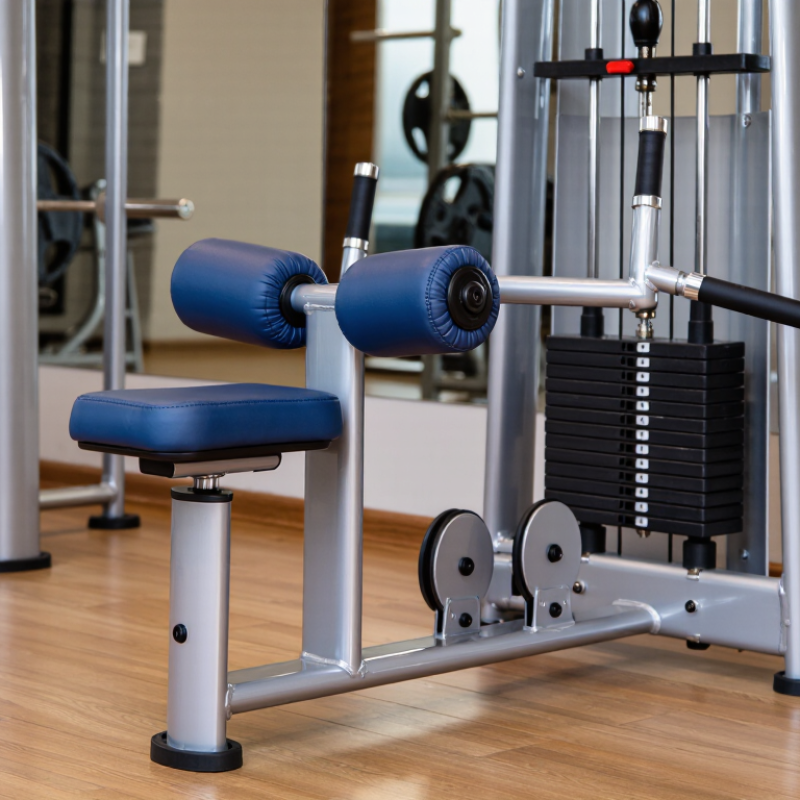
A lat pulldown seated row machine is a strength-training unit combining two pulling exercises in one frame. It targets the back, shoulders, and arms through controlled cable resistance. The upper station supports lat pulldowns, where you pull a bar toward your upper chest. The lower station supports seated rows, where you draw handles toward your waist. Simple idea. Useful design.

A well-built machine should provide an adjustable seat, firm thigh supports, and smooth cable travel. During a lat pulldown, keep your ribs controlled and avoid swinging backward. During a seated row, maintain a tall spine and pull your elbows behind your body. The resistance should challenge the final repetitions without forcing poor posture. A visible weight stack helps users select loads accurately. Quiet pulleys also improve concentration.

From practical equipment checks, frame stability matters more than attractive appearance. Welded joints, protective covers, and durable upholstery can influence daily reliability. Handle spacing should suit different users, because one fixed position may feel uncomfortable. I have found that compact machines sometimes limit legroom or cable movement. That weakness deserves attention. Buyers should request dimensions, load ratings, adjustment details, and maintenance guidance before choosing a supplier. Clear inspection records and replacement-part support make the equipment easier to manage in busy training spaces.

Key Features of a High-Quality Lat Pulldown Seated Row Machine

A high-quality lat pulldown seated row machine should feel stable before it feels impressive. In equipment evaluations, I check the frame, welds, and base movement under load. Heavy-gauge steel, reinforced joints, and level-adjustable feet reduce unwanted shaking. That detail matters. The seat and thigh pads should support different body sizes without forcing awkward hip angles. Dense foam and tear-resistant upholstery also help the machine survive daily commercial use.

Smooth resistance is another key feature. A well-routed cable should travel quietly, without sudden friction or slack. I look for sealed pulleys, corrosion-resistant cable, and an accessible weight-stack selector. Clear markings make workouts easier to repeat, while a protective shroud improves safety around moving parts. The pulldown bar and row handle should provide secure grips and enough width for controlled shoulder movement. It should not feel rushed.

For buyers comparing suppliers in China, production consistency deserves close attention. Ask for material specifications, load-testing records, weld inspection details, and replacement-part support. A reliable supplier should explain maintenance intervals instead of hiding them behind polished photos. I would also request a video showing the machine operating under realistic resistance. Small gaps in quality often appear there. Compact models may save space but limit knee and torso adjustment, so measure the training area carefully before approval.

How to Evaluate Chinese Fitness Equipment Suppliers

Choosing the best Chinese lat pulldown and seated row machine supplier requires more than comparing prices. The Health & Fitness Association’s 2024 Global Report valued the worldwide fitness industry at about US$96.7 billion in 2023. This demand encourages faster production, but quality can vary between factories.

Ask for measurable evidence. Check whether the supplier follows ISO 20957 or relevant EN 957 requirements for stationary training equipment. Request load-test records, cable fatigue results, weld inspection reports, and material specifications. A serious factory should explain frame steel thickness, pulley bearings, upholstery density, and weight-stack tolerances. Examine production samples, not only catalog photographs. Small details matter, such as smooth cable travel and stable rubber feet.

Audit the factory directly or use an independent inspection company. Review its export history, corrective-action records, spare-parts policy, and warranty response time. The 2024 Global Wellness Economy Monitor reported a global wellness economy worth US$6.3 trillion in 2023, showing strong long-term demand for reliable exercise equipment. Still, market growth does not prove supplier capability. I once underestimated packaging quality; a well-built machine arrived with scratched paint and bent covers. That mistake was avoidable. Define carton testing, moisture protection, assembly instructions, and acceptance criteria before payment. Ask difficult questions. Silence is information.

Manufacturing, Quality Control, and Customization Options

China Best Lat Pull Down Seated Row Machine Supplier?

A dependable supplier starts with controlled manufacturing, not attractive product photos. Production teams should verify steel tubing, welding depth, pulley alignment, and seat stability. In practical inspections, small gaps around a weld can reveal inconsistent preparation. Each frame needs dimensional checks before coating. Powder coating should cover corners evenly and resist ordinary gym moisture. These details affect safety, comfort, and service life.

Quality control should continue after assembly. Inspectors can test cable movement, handle balance, bolt torque, and weight-stack travel. Repeated pull tests help expose unusual noise or uneven resistance. A supplier should record material batches and inspection results for every shipment. Clear reports create accountability. They also help buyers compare production lots over time. However, no process is flawless. A first sample may still reveal a misaligned guide rod or overly firm seat foam. Honest suppliers correct these findings instead of hiding them.

Customization can include frame dimensions, upholstery density, stitching, handle shapes, resistance ratios, and instructional labels. Facilities may also adjust carton protection for long-distance transport. Buyers should request drawings, sample approval, tolerance ranges, and replacement-part plans. A useful technical discussion asks how changes affect tooling, lead time, and maintenance. Some requests sound simple but require new fixtures. That part is often underestimated. Reliable cooperation depends on documented revisions, realistic testing, and communication from engineering through final inspection.

China Best Lat Pull Down Seated Row Machine Supplier? - Manufacturing, Quality Control, and Customization Options
Category Data Dimension Typical Industry Specification Manufacturing and Quality-Control Focus Customization Options
Product Structure Primary frame material Welded carbon-steel tubing, commonly using approximately 2.5–3.0 mm wall thickness for commercial equipment. Verify tube dimensions, material certificates, weld penetration, frame alignment, and deformation after load testing. Tube profile, wall thickness, frame geometry, protective covers, and accessible service panels.
Product Structure Base stability Wide contact points with adjustable leveling feet; commercial units commonly weigh approximately 150–300 kg depending on the weight stack and frame design. Check rocking, floor contact, bolt torque, weld consistency, and stability during peak pulling loads. Base width, floor anchor provisions, leveling-foot type, transport wheels, and frame height.
Exercise Function Combined exercise stations Two primary functions: lat pull-down and seated cable row, with independent or shared cable routing depending on the design. Confirm smooth transitions between exercises, correct pulley alignment, cable clearance, and unrestricted user movement. Independent stations, dual handles, foot bracing, adjustable thigh rollers, and additional cable attachments.
Resistance System Weight-stack capacity Common commercial configurations range from approximately 60 to 100 kg of selectorized weight plates. Inspect plate finish, guide-rod straightness, selector-pin retention, stack travel, and resistance consistency. Weight-stack capacity, incremental add-on plate, metric or imperial labels, and protective stack enclosure.
Resistance System Cable and pulley system Coated steel cable, commonly around 5–6 mm in diameter, routed through sealed or shielded pulley assemblies. Test cable tensile integrity, crimped-end security, pulley rotation, bearing noise, cable tracking, and wear resistance. Cable length, pulley ratio, cable coating, pulley diameter, handle type, and attachment storage.
Ergonomics Seat and thigh-pad adjustment Multi-position seat height and adjustable thigh pads to accommodate different user heights and pulling angles. Check locking-pin engagement, adjustment repeatability, pad stability, edge finishing, and pinch-point protection. Seat height range, pad angle, seat width, lumbar support, upholstery density, and upholstery color.
Ergonomics Handle configuration Lat pull-down bar and close- or neutral-grip row handle are typically supplied for different pulling patterns. Inspect welds, grip security, corrosion resistance, rotating joints, and handle load performance. Handle shape, grip diameter, knurling, rubber or foam grip, finish, and accessory package.
Surface Finish Frame coating Powder coating is widely used for commercial fitness frames because it provides a durable, uniform surface finish. Control surface preparation, coating thickness, color consistency, adhesion, impact resistance, and exposed-edge coverage. Matte or gloss finish, single- or two-tone color scheme, texture, and coating thickness.
Upholstery Cushion construction High-density molded or layered foam with abrasion-resistant synthetic leather upholstery for regular commercial use. Check foam resilience, seam strength, staple security, odor, surface uniformity, and resistance to repeated compression. Foam firmness, cushion thickness, upholstery color, logo-free labeling, stitching pattern, and antimicrobial material options.
Safety Guarding and pinch-point control Moving weight stacks and pulley areas should be shielded where practical, with warning labels and controlled cable travel. Perform visual safety review, clearance checks, stop-limit verification, selector-pin testing, and repeated-cycle testing. Guard material, transparent or opaque covers, warning-label language, and facility-specific safety markings.
Testing Functional endurance test A production inspection plan may include repeated cable cycles, adjustment cycles, and resistance-stack operation before shipment. Record cycle count, abnormal noise, cable wear, fastener loosening, pulley temperature, and final functional status. Test duration, cycle quantity, inspection checklist, third-party inspection, and customer-specific acceptance criteria.
Testing Applicable safety framework Commercial strength equipment may be evaluated against relevant regional requirements, such as EN ISO 20957-2, when applicable to the destination market. Confirm the exact model scope, test method, technical file, risk assessment, and supporting laboratory documentation. Destination-market labeling, documentation language, warning symbols, and required inspection scope.
Quality Control Incoming-material inspection Inspection can cover steel tubing, cables, bearings, upholstery, fasteners, guide rods, and coating materials before production. Use material identification, dimensional sampling, visual checks, supplier certificates, and nonconformance records. Inspection level, sampling plan, approved component list, and customer-specified materials.
Quality Control Pre-shipment inspection A complete inspection commonly includes appearance, dimensions, assembly, function, accessories, labels, and packaging. Issue inspection records with photographs, measured values, defect classification, corrective actions, and approval status. Acceptance quality limit, inspection frequency, inspection agency, and customer witness inspection.
Manufacturing Prototype and sample approval A pre-production sample is normally reviewed for dimensions, ergonomics, finish, cable routing, packaging, and user operation. Freeze approved drawings and bill of materials before mass production to reduce design and component variation. Prototype quantity, sample revision process, 2D drawings, 3D files, and pre-production approval criteria.
Supply Planning Typical production lead time For established designs, production planning commonly falls within approximately 30–60 days after approval, subject to order volume and component availability. Use a documented production schedule with material arrival checkpoints, in-process inspections, and final release control. Expedited production review, split shipment, phased delivery, and scheduled spare-parts shipment.
Packaging Export packaging configuration Common packaging uses protective foam, plastic film, reinforced cartons, and pallets or frames suitable for container transport. Perform carton compression review, drop or vibration assessment where required, moisture protection, and package identification checks. Flat-pack or assembled shipment, pallet type, carton markings, barcode labels, spare-parts box, and multilingual instructions.
After-Sales Support Technical documentation Recommended documentation includes assembly instructions, maintenance schedule, exploded parts diagram, warranty terms, and safety information. Control document revision, parts numbering, torque specifications, lubrication points, and replacement-part compatibility. Language, document format, maintenance intervals, parts labeling, QR-linked manuals, and service training materials.
The specifications above are typical planning ranges for commercial lat pull-down and seated row machines. Final values should be confirmed through approved technical drawings, product samples, test records, and destination-market requirements.

How to Select the Best Supplier for Your Business

China Best Lat Pulldown Seated Row Machine Supplier?

Choosing a supplier requires more than comparing online prices. A reliable partner should understand commercial gym use, not only produce attractive equipment. Ask for clear specifications, including frame steel thickness, cable diameter, pulley material, weight-stack capacity, and seat adjustment range. Request recent production photos and a working video showing smooth cable movement. Small details matter.

I once reviewed a machine with excellent upholstery but uneven welds beneath the frame. It looked impressive in a showroom. That experience changed my inspection checklist. Examine weld consistency, bolt access, rubber feet, and protective coating. Ask whether the supplier performs load testing and keeps inspection records. Request one sample unit when the order is significant. It costs more initially, but it can reveal noise, unstable movement, or uncomfortable knee positioning.

Communication also shows supplier quality. A professional team should answer technical questions directly and provide drawings, packing details, lead times, warranty terms, and spare-parts policies. Confirm which conformity documents apply to your target market. Do not accept vague promises. Check the factory’s production capacity, quality-control process, and export experience through verifiable records or an independent inspection. One detail is easy to miss: the shipping crate. Weak packaging can damage painted frames and guide rods before arrival. A lower quote may still become expensive after replacement parts, delays, and customer complaints. I would also test the supplier’s response before placing an order; slow answers now may become slower support later.

China Best Lat Pull Down Seated Row Machine Supplier? How to Select the Best Supplier for Your Business

This supplier evaluation model uses a 100-point purchasing scorecard. Product quality and factory audit receive the highest weighting because they directly affect safety, durability, and long-term operating costs. Buyers should score each supplier against the same criteria before making a final decision.

FAQS

What exercises does a lat pulldown seated row machine support?

It combines lat pulldowns and seated rows in one frame. Pull the bar toward your upper chest. Draw the row handles toward your waist. Simple setup.

Which muscles does this machine train?

It mainly trains the back, shoulders, and arms. Different grips can change the movement’s emphasis. Your posture still matters more than chasing heavy resistance.

What features indicate a high-quality machine?

Look for reinforced joints, stable feet, dense foam, and tear-resistant upholstery. Cables should move smoothly without sudden friction. Quiet pulleys help maintain concentration.

How should users maintain proper posture during exercises?

Keep your ribs controlled during pulldowns. Avoid swinging backward. During rows, keep a tall spine and pull your elbows behind you. Slow repetitions are better.

How can buyers evaluate a supplier?

Request material specifications, load-test records, weld inspections, and cable-fatigue results. Review actual samples, not only polished photographs. Ask difficult questions.

What documents and support should a supplier provide?

Ask for maintenance instructions, inspection records, warranty terms, and replacement-part details. Confirm response times before purchasing. Silence can reveal weak support.

Are compact machines suitable for every training space?

Not always. Compact models may restrict knee room, torso movement, or cable travel. Measure the floor area carefully. I once underestimated legroom.

How can buyers reduce shipping and assembly problems?

Define carton testing, moisture protection, assembly instructions, and acceptance criteria. Check covers and paint after delivery. A strong frame can still arrive damaged.

Conclusion

A Lat Pull Down Seated Row Machine is a versatile strength-training solution that combines vertical pulling and horizontal rowing exercises in one compact unit. It helps users develop the back, shoulders, arms, and core while supporting efficient gym space management. A high-quality machine should offer a stable frame, smooth and quiet cable movement, comfortable adjustable seating, durable upholstery, secure weight resistance, and ergonomic handles suitable for different users.

When evaluating Chinese fitness equipment suppliers, businesses should examine manufacturing experience, production capacity, material standards, quality-control procedures, and after-sales communication. It is also important to confirm whether the supplier can provide customization options, such as color, upholstery, logos, dimensions, packaging, and functional adjustments. The best supplier should combine reliable production, consistent inspection, transparent communication, reasonable pricing, and dependable delivery support. By comparing samples, certifications, service terms, and customization capabilities, buyers can select a trustworthy manufacturing partner that meets their market requirements and supports long-term business growth.

Elowen

Elowen

Elowen is a professional marketing specialist with a deep understanding of the company’s products and the needs they are designed to address. Through careful research and close collaboration with colleagues across the business, Elowen turns product knowledge into clear, useful guidance for......