Choosing a Commercial Elliptical Cross Trainer is a practical investment decision, not just a search for attractive specifications. The Health & Fitness Association’s 2024 U.S. Health & Fitness Consumer Report recorded 72.9 million health club members in 2023. That figure signals a large potential user base, but it does not reveal which machines members prefer or how heavily each facility uses its equipment. Local usage matters.
This guide considers the factors that influence day-to-day performance: frame stability, stride length, resistance range, console clarity, footprint, and ease of maintenance. Start with the people who will use the machine. Taller members may need a longer stride, while busy studios often benefit from simple controls and quick adjustments. Check the rated user capacity, warranty terms, and access to replacement parts. Ask suppliers how routine service is handled, and, where possible, test the machine under realistic conditions. A quiet unit can still feel unstable at higher resistance.
Small details matter. So does the floor plan. Measure doorways and operating space before ordering, rather than relying on product photos. Compare lifecycle costs, not only the purchase price; frequent repairs can outweigh a lower upfront cost. The report’s membership data offers useful market context, but it is not a forecast for any single gym. No single model suits every facility. A grounded choice combines published specifications, supplier evidence, and feedback from actual users—though even careful testing cannot remove every uncertainty.
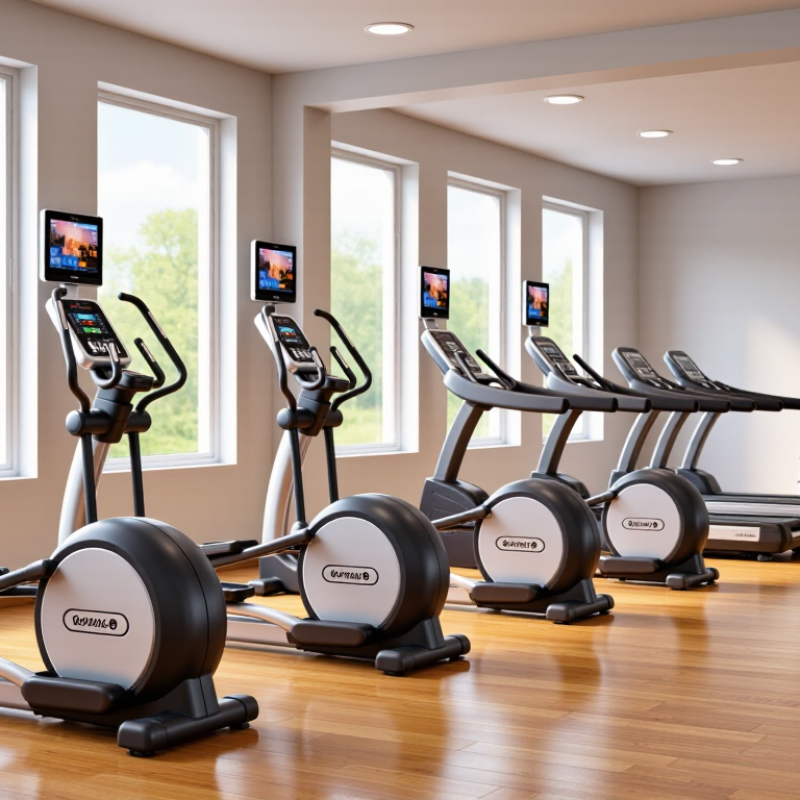
A commercial elliptical should match the people who will use it, not just the room it occupies. Start by defining the main goal: steady cardio, interval training, or low-impact movement for general fitness. A hotel gym may serve beginners and occasional users, while a staff fitness room may see shorter, frequent sessions. A supervised rehabilitation setting has different needs and should follow qualified clinical guidance. That distinction matters.
Tips: Observe a typical workout period. Note who uses the equipment, how long they train, and whether users need different stride or resistance settings. Ask a few regular visitors, too; assumptions can miss the obvious.
Consider user height, experience, mobility, and confidence. A natural-feeling stride and controls that are easy to reach can help different users train comfortably. If possible, invite several intended users to try a floor model before choosing. Watch for awkward reaching, unstable footing, or difficulty adjusting resistance. Record these observations rather than relying on one person’s preference. Peak-hour queues may matter more than a feature list, though it is easy to overlook that when comparing specifications. An equipment choice rarely fits everyone perfectly. Decide which users need the best fit, and which trade-offs the facility can accept.
Commercial ellipticals differ not only in price, but also in drive placement and pedal path. A front-drive frame often creates a climbing motion and a slight forward lean. Rear-drive designs commonly feel flatter and more like a glide. Center-drive machines can feel compact and balanced, though a narrower stance may not suit everyone. Test each design at low and moderate resistance.
Stride length matters as much as frame layout. A fixed 18-inch stride may fit many adults, but shorter users can feel overstretched. Taller users may find themselves shortening their natural step. Adjustable stride systems suit shared facilities, yet their added moving parts need regular inspection. Check that adjustments feel smooth, not jerky. Small detail, big difference.
Match the machine to its actual users, not an idealized body type. Ask several people to pedal for five minutes, then note knee comfort, foot stability, and heel lift. Incline can change which muscles work harder, but it cannot fix a poor stride fit. It is tempting to assume a longer stride is always better; that is too simple. Listen for pedal-arm noise under load, since a quiet test with no resistance can hide looseness.
| Design and Stride Type | Typical Stride Length | Approximate Footprint | Movement and Training Feel | Potential Advantages | Points to Check Before Buying | Best-Fit Setting |
|---|---|---|---|---|---|---|
| Rear-drive, fixed stride | Usually about 18–22 in (46–56 cm), depending on the model | Often about 75–85 in long × 28–34 in wide (191–216 × 71–86 cm) | Flywheel sits behind the user. The pedal path commonly feels smooth and elliptical, with a relatively upright posture. | Familiar layout; broad range of commercial configurations; straightforward option for general cardio use. | Confirm the stride suits the intended users. Check stability, step-up height, moving-arm clearance, and service access. | Gyms and fitness rooms seeking a conventional, all-purpose cross trainer. |
| Front-drive, fixed stride | Commonly about 18–24 in (46–61 cm) | Often about 78–88 in long × 28–34 in wide (198–224 × 71–86 cm) | Drive assembly sits in front. The pedal path may feel more angled, and some designs encourage a slight forward lean. | Can provide a longer stride in some models; may suit users who prefer a more climbing-like movement. | Try the motion if possible: pedal path and posture vary by design. Check overall length and clearance around the front assembly. | Facilities comparing a more forward-leaning feel or seeking a longer fixed stride. |
| Center-drive, fixed stride | Often about 18–22 in (46–56 cm) | Many models are approximately 65–75 in long × 28–34 in wide (165–191 × 71–86 cm) | Drive components sit on either side of the user. The stance can feel centered, and the machine may have a shorter overall length. | Compact footprint can help where floor space is limited; centered layout may feel balanced to some users. | Check pedal spacing, mounting height, and how the machine feels for users of different heights. Compact does not always mean a shorter stride. | Smaller commercial rooms where equipment footprint is an important consideration. |
| Any drive design, adjustable stride | Typically adjustable across a model-specific range, often around 18–26 in (46–66 cm) | Varies by drive system; commonly similar to or larger than the comparable fixed-stride model | Stride length can be changed to better match different users or workout preferences. Adjustment may be manual or electronically controlled. | Offers flexibility for shared-use facilities and can accommodate a wider range of preferred step lengths. | Verify the actual minimum and maximum stride, adjustment method, ease of use, and whether stride changes while moving. | Multi-user facilities with varied user heights, preferences, or training programs. |
| Any drive design, fixed long stride | Often about 22–24 in (56–61 cm); check the published specification | Usually requires a full-size commercial footprint; dimensions vary by model | A longer pedal path may feel more natural for some taller users, but stride comfort is individual. | May better suit users who find shorter strides restrictive; useful when the primary user group has longer stride preferences. | Have users of different heights test it. A long stride is not automatically more comfortable for everyone. | Facilities whose users prefer or benefit from a longer fixed stride. |
| Selection note | Dimensions and stride ranges are general reference estimates, not specifications for a particular machine. Compare manufacturer specifications, user weight capacity, warranty, noise, console features, resistance range, incline options, accessibility, and commercial-duty service support before purchase. | |||||
A commercial elliptical should withstand repeated use, not just feel sturdy during a brief showroom test. Check the frame’s construction, pedal stability, and moving joints for side-to-side play. Compare the stated user-weight limit with your facility’s needs, and ask how often routine inspections are recommended. A quiet machine can still have hidden wear.
Resistance should change smoothly across its range. Try several levels and listen for sudden clunks or uneven effort. Magnetic systems often run quietly, but the feel matters more than the label. The console should show clear readings for time, resistance, and pace. Large buttons help users adjust settings without interrupting their stride. Look for simple workout controls and easy-to-read screens under bright room lighting. A long warranty is useful, but it does not guarantee quick repairs; check service access and parts availability, too.
Tips: Test the machine with different users if possible. Wipe the console with a damp cloth to check screen visibility. Ask staff to try common adjustments. Small details matter. I would not choose by console features alone; extra programs can look impressive, yet go unused when menus feel confusing.
Measure the proposed elliptical and mark its footprint on the floor before ordering. As a planning allowance, reserve roughly 7 feet by 3 feet per unit, then add clear space for entry, movement, and service access. Check door swings, columns, and nearby equipment; a paper floor plan can hide awkward pinch points. I would leave more room than the drawing suggests. Real rooms rarely match drawings.
Maintenance and downtime belong in the budget. Ask about belt, pedal, bearing, and console inspections, plus local technician response times. NIST’s Handbook 135 life-cycle costing approach counts purchase, operating, maintenance, and replacement costs—not just the invoice. That adds up. For electricity, the U.S. Energy Information Administration reported an average commercial rate of about 12.6 cents per kilowatt-hour in 2024. If a console draws 10 watts for ten hours daily, that is about 37 kilowatt-hours, or roughly $5 yearly at that rate. Actual draw varies, so verify it. Compare service intervals, parts availability, warranty coverage, and expected downtime across models; a low purchase price can become expensive when equipment sits unused.
Before buying a commercial elliptical cross trainer, test the exact unit you plan to install. A showroom model can feel different from a machine assembled on an uneven floor. Bring the intended users, if possible, and have each person pedal for several minutes. Check whether the stride feels natural at slow and brisk speeds. Listen for knocking, scraping, or a rhythmic click. Quiet matters.
Verify the specifications against the equipment manual, not just a sales sheet. Confirm the maximum user weight, stride length, resistance range, and power requirements. Ask whether those figures apply to continuous commercial use. Test resistance changes while moving, and note any delay or sudden jump. Place a phone on the console shelf; it should stay steady during a hard effort. Check that emergency stops, moving joints, and adjustment points are easy to reach and operate. Ask for written maintenance intervals, parts availability, and service response expectations. A warranty sounds reassuring, but its exclusions can be easy to miss. Record the serial number and test results, too. I once overlooked a floor clearance issue; it was a small mistake, but an expensive one. Recheck the setup after installation.
Compare the unit’s measured or physically verified specifications with the supplier’s stated values. The example below is illustrative, not a report of a specific machine.
Values are normalized to the supplier-stated specification (100%). Check stride length with a tape measure, count resistance levels on the console, and confirm maximum user weight on the product label or technical documentation. Verify warranty terms separately in writing.
Define the main goal: steady cardio, intervals, or low-impact movement. Consider user height, experience, mobility, and confidence. Ask regular visitors what they need. Peak-hour queues may matter more than a long feature list.
Note workout length and preferred stride and resistance settings. Invite several intended users to test a floor model. Watch for awkward reaching or unstable footing. One person’s preference is not enough.
Use roughly 7 feet by 3 feet as a planning allowance. Add room for entry, movement, and service access. Check doors, columns, and nearby equipment. Paper plans can hide tight spots. Real rooms rarely match drawings.
Include purchase, electricity, maintenance, and replacement costs. Ask about belt, pedal, bearing, and console inspections. Compare parts availability and technician response times. Downtime costs money, too.
A 10-watt console running ten hours daily uses about 37 kilowatt-hours yearly. At 12.6 cents per kilowatt-hour, that is roughly $5 annually. Actual usage varies. Verify it.
Test the exact unit planned for installation, ideally with intended users. Pedal slowly, then briskly. Listen for knocking, scraping, or rhythmic clicks. Check whether the stride feels natural. Quiet matters.
Check maximum user weight, stride length, resistance range, and power requirements in the manual. Confirm the figures apply to continuous commercial use. Test resistance changes while moving. Stops and adjustment points should be easy to reach.
Recheck floor clearance and stability on the actual floor. Keep test results, maintenance intervals, parts details, and service expectations in writing. Read warranty exclusions carefully. A small clearance mistake can become costly.
Choosing a Commercial Elliptical Cross Trainer starts with understanding who will use it and what workouts it needs to support. Consider the users’ fitness levels, expected usage, and training goals, then compare designs and stride types to find a comfortable, natural movement suited to a wide range of people. Look closely at frame construction, stability, resistance options, and console features, including whether the controls and workout information are easy to use.
Before making a decision, measure the available floor space and allow room for safe access and movement. Review maintenance needs, serviceability, and the total cost of ownership rather than focusing only on the initial price. Whenever possible, test the equipment to assess comfort, noise, and operation firsthand. Finally, verify that its specifications and construction are appropriate for frequent commercial use, so the chosen machine can meet the facility’s needs over time.