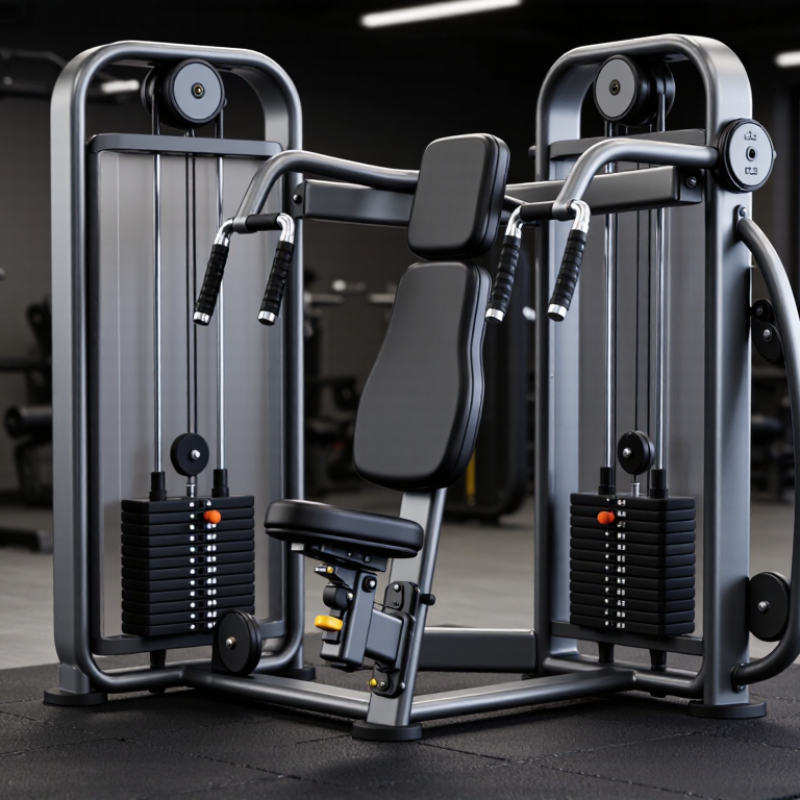
Choosing a Commercial Chest Press Machine requires more than comparing prices and polished product photos. The right unit should support safe, repeatable training throughout busy gym hours. It must also fit your members, floor plan, maintenance budget, and service expectations.
In my experience, the strongest evaluation begins with the movement path. Test the starting position, handle spacing, seat adjustment, and pressing resistance. Your shoulders should feel supported, not forced forward. Check whether the machine allows different body sizes to train comfortably. Small details matter. A thick back pad, stable frame, and clear adjustment markings can improve confidence during every set.
Look closely at construction quality, too. Inspect welds, cable routing, bearings, upholstery, and weight-stack protection. Ask the supplier about commercial warranties, replacement parts, inspection schedules, and technician response times. A low purchase price may become expensive when a pulley fails during peak hours. I once underestimated upholstery durability in a high-use area. That was a costly lesson, and it changed how I review gym equipment.
Reliable selection also requires evidence. Compare manufacturer specifications with independent reviews, facility feedback, and hands-on testing whenever possible. Consider the machine’s footprint, noise level, accessibility, and cleaning requirements. No product is perfect. The best choice balances biomechanics, durability, user comfort, and long-term operating value. This guide explains how to assess each factor clearly before your facility makes a confident investment.
Start with the people who will use the machine. A high-volume gym may serve beginners, older adults, athletes, and rehabilitation clients. Each group needs different resistance steps, seat adjustments, and movement control. ACSM’s 2024 Worldwide Survey ranked traditional strength training fifth among global fitness trends. That position suggests continued demand, but demand alone does not define the right machine.
Measure expected daily sessions, user height ranges, and available floor space. A facility serving 80 chest-press users daily needs durable upholstery, smooth bearings, and simple adjustment points. Count the details. Can a user change the seat without leaving the machine? Does the pressing path suit both short and tall members? Small failures become visible quickly.
Training goals matter more than appearance. For general strength, choose adjustable resistance and a stable back pad. For athletic programs, consider independent handles that expose left-right strength differences. For beginners, controlled resistance and clear starting positions reduce hesitation. NSCA guidance commonly supports two or more weekly resistance-training sessions, but commercial users may train with inconsistent schedules. Design for that reality.
IHRSA’s 2024 Global Report recorded more than 184 million health-club members worldwide in 2023. That scale increases equipment demands. Still, I would not select the heaviest frame automatically. It may waste space and reduce circulation. Test the machine with real users, record adjustment time, and inspect movement noise after repeated sessions. My first choice can be wrong. User feedback should be allowed to change it.
Sources: ACSM, Worldwide Survey of Fitness Trends 2024; Health & Fitness Association, 2024 Global Report; NSCA resistance-training guidance.
How to Choose a Commercial Chest Press Machine?
A commercial chest press should match the movement pattern your facility needs. A selectorized machine uses a weight stack and pin. It supports quick adjustments, steady resistance, and controlled training for mixed experience levels. A plate-loaded press feels more like free-weight training. It can provide heavier loading, but changing plates takes more time. It also demands stronger spotting procedures and clearer user instruction.
Movement direction matters. A horizontal press keeps the handles close to chest level. It mainly trains the pectoral muscles, triceps, and front shoulders. A converging press allows each handle to move slightly inward. This pattern often feels natural because the hands follow the chest’s pressing path. An iso-lateral model lets both arms work separately. That can expose strength differences, although some users may struggle to control uneven movement.
Test the machine in person. Sit down, adjust the seat, and check whether the handles align with mid-chest height. Your elbows should move comfortably without forcing the shoulders forward. Examine the starting range and the resistance near lockout. These details affect comfort more than appearance.
A wide grip is not automatically better. Neither is a heavier stack. I once favored a machine with a generous range of motion, but shorter users found it uncomfortable. That mistake changed my evaluation process. Measure real users, not only specifications. Safety stops, clear adjustment points, stable frames, and accessible maintenance areas also deserve close attention.
Compare common chest press machine types by typical backrest angle and pressing direction. The values represent common commercial design ranges and may vary by equipment model.
The handles travel mainly forward in a stable horizontal path. This design is suitable when consistent resistance and low stabilization demand are priorities.
The handles move forward and slightly toward the midline, following a more natural pressing pattern for many users.
The upward pressing angle generally increases involvement from the clavicular portion of the pectoralis major and the anterior deltoids.
The downward pressing angle generally emphasizes the sternal and lower fibers of the pectoralis major while reducing the upward reach of the press.
Angle reference: 0° represents a horizontal pressing direction; positive values indicate an upward press and negative values indicate a downward press. Actual movement varies with seat adjustment, handle geometry, and machine design.
Choosing a commercial chest press machine starts with adjustability, not appearance. ACSM’s 2024 Worldwide Survey of Fitness Trends ranked traditional strength training fifth among 45 trends. That demand makes fit testing essential. Seat height should support different torso lengths. Handle positions should let users press without shoulder strain. Adjustments must be visible, quick, and lock firmly.
Ergonomics appears in small details. A stable back pad should keep the spine supported during every repetition. Handles should allow a neutral wrist position, with no sharp pressure points. The starting range must not force excessive shoulder extension. Try the machine slowly. If the elbows flare or the user shifts on the seat, the geometry needs reconsideration. It may look efficient, but it may not feel safe.
User safety also depends on design and maintenance. A commercial unit should include guarded moving parts, clear resistance indicators, and accessible emergency instructions. ASTM International’s fitness-equipment guidance emphasizes structural integrity, pinch-point control, and warning information. Ask for documented testing, inspection records, and maintenance intervals. A perfect specification sheet can still miss real-world problems. Test the machine with shorter and taller users, not only experienced lifters. Small failures in adjustment can become repeated loading errors.
A commercial chest press machine should feel stable before it feels impressive. Stand beside it and check whether the frame rocks during a slow test repetition. Look closely at welds, bolts, and adjustment pins. Clean weld beads usually suggest careful fabrication, though appearance alone proves little. Ask for the machine’s load rating and structural testing records. Ask for evidence.
The moving arms should travel smoothly without grinding, hesitation, or side-to-side play. Inspect cables, pulleys, bearings, and protective covers. Small gaps can collect dust and sweat, especially in busy training rooms. Upholstery should resist tearing and allow quick cleaning. I once overlooked a loose seat adjustment, and repeated use made the problem worse. That mistake changed how I inspect machines.
Maintenance access also deserves attention. Can staff reach the lubrication points without removing half the frame? Are replacement parts clearly listed and reasonably available? Request a maintenance schedule, service instructions, and expected part costs. Warranty support should state coverage periods for the frame, upholstery, cables, and labor. Check exclusions carefully. A long warranty means little if service response is slow or unclear. Get repair procedures in writing. Keep every document.
Choosing a commercial chest press starts with your facility, not a catalog. Measure twice.
Record floor area, ceiling height, door widths, and clearance around moving handles. A compact room may need a machine with a smaller footprint. A busy club may need a heavier frame and faster seat adjustments. Space changes everything.
Test the pressing path with different body sizes. Handles should move smoothly without forcing the shoulders forward. Trainers should inspect the seat, back pad, adjustment pins, and grip positions before purchase. That small check often reveals poor usability. Ask suppliers for complete dimensions, maximum user weight, maintenance requirements, and installation details. Do not rely only on attractive photographs.
Your budget should include delivery, assembly, flooring protection, and future replacement parts. A cheaper machine can become expensive when daily use loosens hardware or damages upholstery. Look for strong welds, stable feet, accessible service points, and clear adjustment markings. These details support safer, more consistent training.
I have seen facilities buy impressive equipment that barely fits through the entrance. It is an avoidable mistake. Measure the route, not just the training area. Leave enough room for wheelchair access, coaching, and safe movement between stations. Not every choice will be perfect. A slightly simpler machine may serve members better than an advanced model nobody can adjust quickly. Test it during busy hours, if possible. That is where weak planning becomes visible.
Beginners, older adults, athletes, and rehabilitation clients may use it. Each group needs different resistance, seat positions, and movement control.
Count expected daily sessions, user heights, and available floor space. An eighty-user schedule demands durable upholstery and smooth bearings. Small failures appear quickly.
A selectorized system offers quick pin changes and steady resistance. A plate-loaded system supports heavier training but requires slower plate changes. Neither option is perfect.
A horizontal press keeps handles near chest height. A converging press moves handles slightly inward. Independent handles can reveal left-right strength differences.
Sit down, adjust the seat, and align handles with mid-chest height. Elbows should move comfortably without forcing shoulders forward. Test real users.
Look for a stable back pad and handles supporting neutral wrists. The starting position should not force excessive shoulder extension. Comfort matters more than appearance.
Choose guarded moving parts, clear resistance markings, and firm adjustment locks. Safety stops and visible instructions also help. Inspect pinch points carefully.
Follow documented inspection intervals and review maintenance records. Check upholstery, bearings, adjustment points, and unusual movement noise. Noise can signal trouble.
No. A heavy frame may waste space and reduce circulation. Compare stability, footprint, access, and real user comfort. My first choice may be wrong.
Choosing the right Commercial Chest Press Machine begins with understanding your facility’s training goals, user profile, and expected workout volume. Consider whether the machine will serve general fitness members, athletes, rehabilitation users, or a combination of groups. Compare available chest press designs and movement patterns, such as independent or synchronized pressing arms, to determine which option provides the most effective and natural training experience.
Next, evaluate seat and handle adjustability, body positioning, range of motion, and built-in safety features to support users of different sizes and abilities. Construction quality is equally important, so inspect the frame, upholstery, cables, joints, and weight system for durability and easy maintenance. Review the warranty and service support before making a decision. Finally, match the machine to your facility’s floor space, layout, budget, and future expansion plans. A well-selected chest press should offer reliable performance, comfortable operation, efficient use of space, and lasting value for both users and facility managers.