Commercial Gym Equipment refers to the machines, weights, and training tools built for frequent use in gyms, studios, and fitness centers. It is more than a row of treadmills. A typical facility may include cardio machines, strength equipment, free weights, benches, and functional training tools. Each group serves a different purpose, from steady-state cycling to controlled resistance exercises.
The exact mix depends on the people using the space. A neighborhood gym may need sturdy treadmills, adjustable benches, dumbbells, and cable machines. A performance studio might prioritize squat racks, barbells, bumper plates, and open floor space. Look closely at practical details: frame stability, weight capacity, adjustment points, service access, and the feel of handles under repeated use. Small details matter. A slippery grip or awkward seat adjustment can disrupt a workout, even when the machine looks impressive.
Commercial equipment is generally designed to handle heavier traffic than typical home fitness gear, but the label alone does not guarantee suitability. Buyers should compare product specifications, warranties, maintenance requirements, and available support. It is also worth considering how equipment fits together: crowded walkways and poorly placed machines can make a well-equipped room difficult to use. Needs change. And specifications do not tell the whole story; real users may find a supposedly comfortable machine frustrating after several sessions. This guide explains what commercial gym equipment includes, how its main categories differ, and what to consider when choosing pieces for a facility.
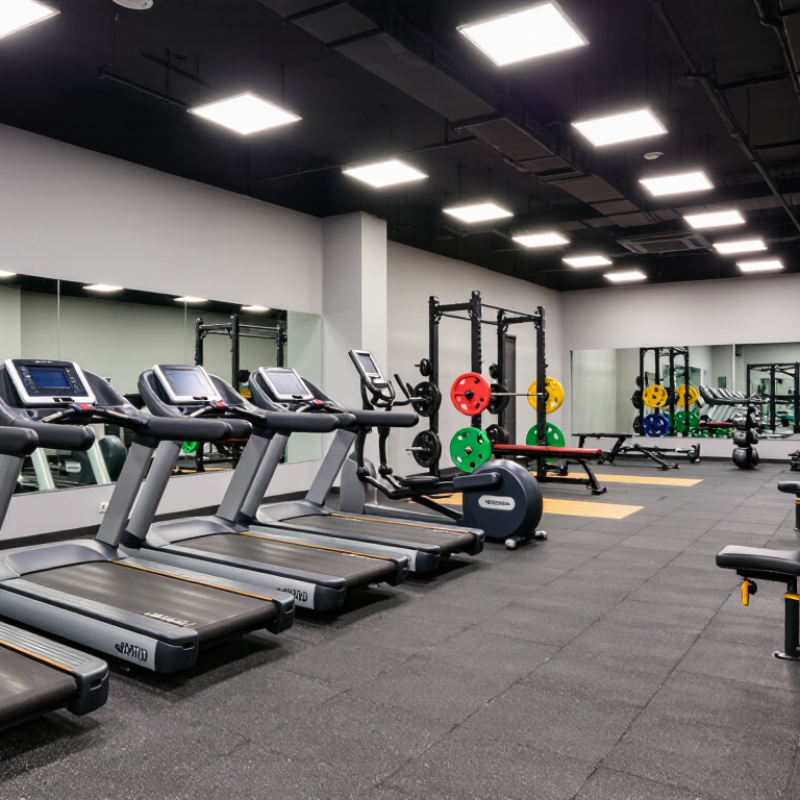
Commercial gym equipment is designed for frequent, shared use in fitness facilities, rather than occasional use at home. It covers cardio machines such as treadmills and stationary bikes, strength equipment such as cable stations and leg presses, plus racks, benches, barbells, dumbbells, and functional-training tools. The category also includes practical details: adjustable seats, weight-stack guards, clear load markings, and floor space for safe movement. A machine’s appearance alone does not make it commercial-grade. Build quality, serviceability, user adjustment, and suitability for busy traffic matter.
The boundary can blur. A heavy-duty bench may work in a home gym, while a facility may use compact equipment in a small studio. The American College of Sports Medicine’s 2024 Worldwide Survey of Fitness Trends ranked traditional strength training second, reflecting its continued place in facility programming. The Health & Fitness Association’s 2024 U.S. Health & Fitness Consumer Report counted 72.9 million facility members in 2023. These reports describe participation and trends, not a technical definition of equipment. Buyers still need to assess the intended user volume, maintenance needs, available space, and exercise options. A rack with a stable base and reachable safety arms is useful; poor placement can still make it awkward.
| Equipment Category | What It Includes | How It Is Defined | Typical Use in a Facility |
|---|---|---|---|
| Cardio Equipment | Treadmills, stationary bikes, ellipticals, rowing machines, and stair-climbing machines. | Machines designed for sustained cardiovascular exercise, commonly with adjustable resistance, speed, or incline and monitoring displays. | Warm-ups, endurance training, and low-impact or higher-intensity aerobic workouts. |
| Selectorized Strength Machines | Guided-path machines such as chest presses, leg presses, lat pulldowns, and leg-extension machines. | Strength-training machines that use a selected weight stack and a fixed or guided movement path. | Accessible, structured resistance training for different muscle groups and experience levels. |
| Plate-Loaded Machines | Lever-based machines that are loaded with weight plates, including plate-loaded presses and rows. | Resistance machines that use removable plates rather than an integrated selectorized weight stack. | Strength training with a guided movement and user-adjustable loading. |
| Free Weights | Dumbbells, barbells, weight plates, and adjustable benches. | Unfixed resistance equipment that allows users to move weights through a range of motion without a machine-guided path. | Compound lifts, accessory exercises, and training that requires balance and coordination. |
| Racks and Lifting Stations | Power racks, squat racks, Smith machines, cable stations, and weight-storage systems. | Structural equipment used to support, guide, or organize barbell and resistance exercises. | Squats, presses, pulls, and other strength exercises, often with adjustable safety supports. |
| Cable and Functional Training Equipment | Cable crossovers, adjustable pulley systems, suspension trainers, and functional training stations. | Equipment that provides resistance through cables, pulleys, or body weight, often allowing movement in multiple directions. | Resistance exercises, movement training, and varied full-body workouts. |
| Body-Weight and Conditioning Equipment | Pull-up and dip stations, plyometric boxes, sleds, medicine balls, and battle ropes. | Equipment used for exercises that rely primarily on body weight, external loads, or repeated athletic movements. | Circuit training, conditioning, power development, and body-weight strength exercises. |
| Flooring and Safety Accessories | Weight-room flooring, lifting platforms, collars, mats, and equipment anchors where required. | Supporting products that help create a stable training surface, organize equipment, or reduce movement during use. | Protecting floors, defining training areas, and supporting safe equipment setup and use. |
| Commercial-Use Characteristics | Equipment selected for shared facilities such as gyms, recreation centers, hotels, and institutional fitness rooms. | “Commercial” describes equipment intended for frequent use by multiple users; suitability depends on its construction, maintenance requirements, safety features, and the facility’s needs. | Choosing equipment for expected user traffic, available space, exercise variety, accessibility, and ongoing maintenance. |
It is designed for frequent, shared use. Durable construction, serviceable parts, clear load markings, and easy adjustments matter. Appearance alone proves little.
Cardio options include treadmills, stationary bikes, ellipticals, rowers, and stair climbers. Strength areas may have cable stations, leg presses, racks, benches, barbells, and dumbbells.
Treadmills adjust speed and incline. Bikes place less stress on joints. Ellipticals offer continuous movement with less foot impact. Rowers use the legs, back, and arms. Technique matters. Stair climbers raise heart rates quickly, but they are not for everyone.
Leave enough room for safe movement. Keep emergency controls visible, use stable flooring, and consider ventilation. A cramped layout may look efficient but feel awkward in practice.
Staff should check pedals, belts, handles, screens, and resistance systems. Small faults can become distracting. A regular schedule helps, though the right timing depends on use.
No. Heart-rate and workout readings are estimates, not perfect measurements. Use them as guides rather than treating every number as certain.
No. A heavy-duty bench may suit a home gym, while a facility may need compact equipment for a small studio. User volume, space, and maintenance needs matter more.
Simple instructions, adjustable programs, and heart-rate monitoring can help. People often choose familiar machines over effective ones. That pattern deserves a closer look.
Commercial Gym Equipment refers to the durable, professional-grade machines, tools, and accessories designed for use in fitness centers, training studios, hotels, schools, and other shared exercise facilities. Unlike home equipment, it is built to handle frequent use, support different fitness levels, and provide reliable performance over time. Its design typically emphasizes strength, safety, adjustability, ease of maintenance, and efficient use of facility space.
The main categories include strength training equipment, cardio machines, and supporting facility essentials. Strength equipment may include free weights, racks, benches, cable systems, and resistance machines for developing muscle and functional power. Cardio equipment, such as treadmills, bikes, rowers, and cross-training machines, helps users improve endurance, heart health, and overall conditioning. Supporting equipment includes exercise mats, storage systems, platforms, mirrors, flooring, cleaning supplies, emergency tools, and clear safety features. Together, these elements create an organized, flexible, and secure environment for a wide range of workouts.