Choosing among the top plate loaded gym equipment manufacturers for sale is a practical decision, not just a search for polished product photos. Buyers need to compare frame construction, weld quality, adjustment points, loading-pin design, finish durability, warranty terms, and access to replacement parts. A squat machine should feel steady under load; a chest press should move smoothly without awkward shoulder positioning. Small details matter.
Industry reports offer useful context, though they do not always isolate plate-loaded equipment. The American College of Sports Medicine’s 2025 Worldwide Fitness Trends survey tracks changes in training preferences and professional programming. Its findings can help buyers assess why strength equipment remains relevant, but they cannot replace hands-on testing or supplier checks. ACSM’s survey lead, Walter R. Thompson, has said, “The annual survey helps the health and fitness industry make important programming and business decisions.” That is a helpful lens. It is not a product endorsement.
This guide examines manufacturers through the factors that shape long-term value: engineering, production capacity, customization, quality control, shipping readiness, and after-sales support. For gyms, distributors, and commercial buyers, the lowest quote may hide costly compromises. Ask for load ratings, inspection records, clear warranty language, and references from operating facilities. Then compare machines in person when possible. Feel the movement. Check the finish. A catalog cannot tell you everything.
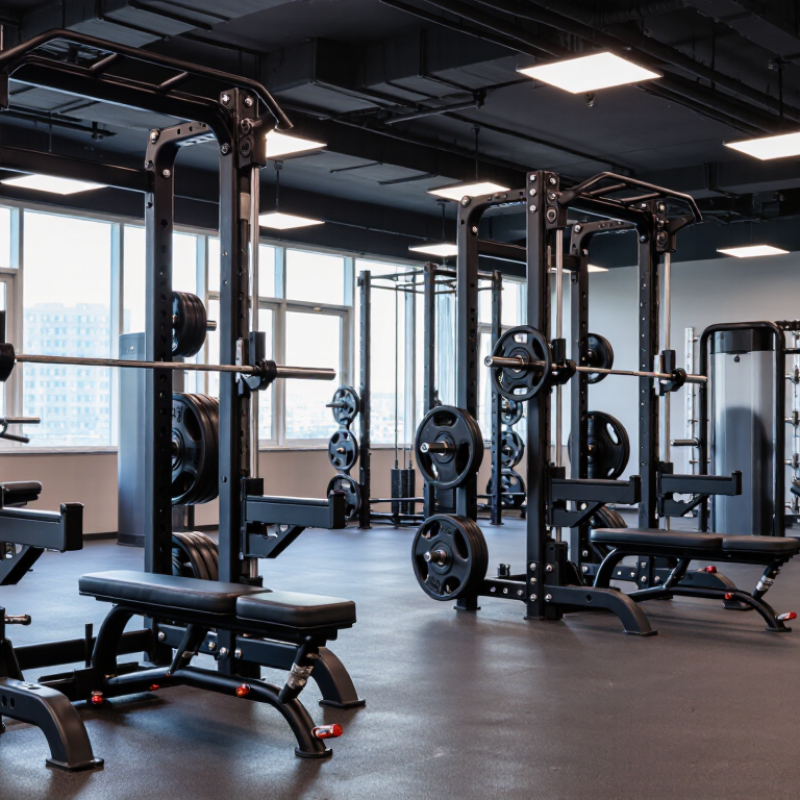
Plate-loaded gym equipment uses weight plates to create resistance through moving arms, levers, or sleds. A typical station includes a steel frame, plate sleeves, handles, and an adjustable seat or back pad. Common examples include chest presses, rowing machines, shoulder presses, hack squats, and leg presses. The exact selection varies by facility.
The plates are usually separate from the machine. Users load them onto sleeves, then secure them with collars when needed. Some machines have independent arms, allowing each side to move separately. Others use a shared lever or sled. That difference changes the feel of an exercise and how evenly force is applied. Small details matter. Check that the seat locks firmly and the sleeves show no damage. It is easy to overlook worn contact points during a quick inspection.
Tips: Match the machine to the movement and available floor space. Start with a light load, adjust the seat so joints align comfortably, and use a controlled range of motion. Ask a qualified fitness professional to review setup if the movement feels awkward. A machine can seem simple, but poor positioning still deserves attention.
Plate-loaded equipment commonly includes presses, rows, leg machines, and other strength-training stations. This chart counts representative machine types by training focus; it is not a measure of market share or sales.
When comparing plate-loaded equipment manufacturers, start with the machine, not the catalogue photos. Ask for drawings, dimensions, and maximum load ratings for each model. Check that the frame, seat, and handles suit your users and available floor space. Details matter. Look closely at welds, pivot points, and finish quality on a sample unit. Ask to see samples.
Request written test procedures and ask how often production units are inspected. Confirm that load ratings apply to the finished machine, not just individual components. A capable manufacturer should explain these details clearly and provide documentation. I still find specification sheets easy to misread when measurements lack context. That gap matters. Ask how the equipment performs under repeated use, and whether test results are available.
Check lead times, warranty terms, replacement-part availability, and installation support before comparing prices. Ask how quickly common wear parts can be supplied, and whether assembly instructions are clear. References from gyms with similar usage can reveal issues that a factory visit may miss. A polished sample is useful, but it cannot answer everything. Compare the sample with the final production specifications, then record any differences before placing an order.
Top Plate Loaded Gym Equipment Manufacturers for Sale
Leading manufacturers distinguish themselves through focused product families, not just broad catalogs. Some specialize in iso-lateral chest presses, where independent arms allow each side to move separately. Others concentrate on hack squats, leverage rows, or compact plate-loaded stations for smaller gyms. These details affect training feel, floor layout, and how easily staff can adjust equipment between users.
Demand supports close attention to strength equipment. ACSM’s 2025 Worldwide Fitness Trends survey ranked traditional strength training fourth among predicted fitness trends. The survey tracks professional opinions, not equipment sales, so it signals interest rather than guaranteed purchasing demand. When comparing manufacturers, inspect welds, pivot smoothness, weight-horn length, and the path of each lever. Ask for load ratings and dimensional drawings. A strong catalog can still hide awkward entry angles. Details matter.
Tips: Test the machine with plates loaded, if possible. Check seat adjustments, grip reach, and clearance around moving arms. For a busy facility, favor clear adjustment labels and replaceable upholstery. Request service documentation before ordering; I would not assume every supplier offers equally prompt support. Ask what parts are stocked locally, and confirm lead times in writing.
Plate-loaded equipment should be compared by construction, total cost, and delivery readiness—not by price tags alone. Check frame steel thickness, weld consistency, powder-coat coverage, and sleeve fit. Load a sample machine if possible; plates should move smoothly without clanking or catching. That matters. Ask for warranty terms, replacement-part timelines, and clear assembly requirements before ordering.
Demand makes availability worth checking carefully. The Health & Fitness Association’s 2024 Global Report recorded 72.9 million U.S. fitness-facility members in 2023, up 5.8% from 2022. That figure signals a sizable customer base, but it does not guarantee fast equipment supply. Grand View Research estimated the global fitness-equipment market at USD 16.04 billion in 2022 and projected 5.3% annual growth from 2023 to 2030. These market estimates offer context, not proof of any seller’s quality.
Compare quoted prices with freight, installation, taxes, and expected maintenance. A lower price can lose its appeal when replacement parts take weeks to arrive. Request written stock status and a realistic delivery window, then confirm whether items are ready to ship or made to order. No checklist is perfect. A polished specification sheet cannot show a rough pivot or a delayed service response, so ask for a live demonstration and recent customer references.
Choosing a plate loaded equipment manufacturer starts with your facility, not a catalogue. Measure the training area, doorways, and storage routes before comparing machines. A plate-loaded chest press may look compact online, yet need more clearance when users move its arms. Check the stated load capacity, frame material, weld quality, and adjustment points. Ask for technical drawings and inspection records. Clear answers are a good sign.
Test equipment in person when possible. Load a few plates, adjust the seat, and listen for rattling or uneven movement. Small details matter. Ask how replacement pads, pins, and other wear parts are ordered, and whether the supplier can provide realistic lead times. Review warranty terms carefully; coverage may differ between frames, cables, and upholstery. Compare the delivered cost, including freight and installation, rather than focusing only on the listed price. There is no perfect checklist. I would still leave room for judgment, because a polished showroom does not reveal every issue that appears after months of daily use. Request references from facilities with similar traffic, and ask what they would change about their purchase.
It uses weight plates to create resistance through moving arms, levers, or sleds. Common examples include presses, rowing machines, and leg presses.
Most include a steel frame, plate sleeves, handles, and an adjustable seat or back pad. Check that the seat locks securely.
Independent arms let each side move separately. Shared levers move together, so the exercise can feel different. Small details matter.
Start with a light load and adjust the seat until your joints feel comfortable. Look for damaged sleeves, loose parts, or worn contact points.
Inspect the frame, welds, coating, and sleeve fit. If possible, test a loaded machine and listen for clanking or uneven movement.
Add freight, installation, taxes, and likely maintenance. A lower listed price may not help if replacement parts take weeks to arrive.
Request written stock status and a realistic delivery window. Confirm whether equipment is ready to ship or made to order. Plans can still change.
Ask about warranty coverage, replacement pads and pins, and repair timelines. Request references from facilities with similar daily traffic. I would still ask what they would change.
This article explores what Plate-Loaded Gym Equipment includes, from strength-training machines that use weight plates to the design features that support different exercises. It explains how to assess manufacturers by considering construction, materials, engineering, product range, and the quality of customer support. Rather than focusing on brand names, the guide highlights the product specialties and practical differences facilities may encounter when comparing suppliers.
Readers will also learn how to weigh equipment quality against pricing, delivery times, and availability. These factors can affect both a facility’s budget and its ability to create a useful, well-rounded training space. The article concludes with a practical approach to choosing a manufacturer, encouraging buyers to match equipment options and service capabilities to their facility’s needs, space, and long-term plans.