0%

Choosing commercial fitness equipment is rarely simple for global buyers. A 45 Degree Leg Press Machine must deliver strength, stability, comfort, and dependable daily performance. It should also match the user’s training goals, facility space, maintenance capacity, and local purchasing requirements.

This guide reviews ten notable machines through practical criteria rather than marketing claims. We examine frame construction, carriage movement, weight capacity, footplate design, backrest adjustment, safety stops, and access for different users. Details matter. A smooth rail can reduce distracting vibration, while a wide footplate may support more confident positioning. Clear assembly instructions and available replacement parts also influence long-term ownership.

Real equipment evaluation involves more than reading specifications. Coaches, facility managers, and experienced users often notice issues that product pages overlook. For example, a machine may look compact but require substantial clearance behind the carriage. A heavy sled may feel impressive, yet beginners might need easier starting resistance. That difference matters.

No ranking can fit every gym.

Therefore, this selection balances performance, usability, durability, and value across different markets. Product availability, warranty coverage, shipping conditions, and regional service support can change over time. Buyers should verify these points directly before ordering. We also acknowledge a limitation: published specifications do not always reveal long-term wear, noise, or maintenance frequency. Treat this list as a well-researched starting point, not a substitute for hands-on inspection. The best 45 Degree Leg Press Machine is the one that safely fits its users, space, budget, and training demands.
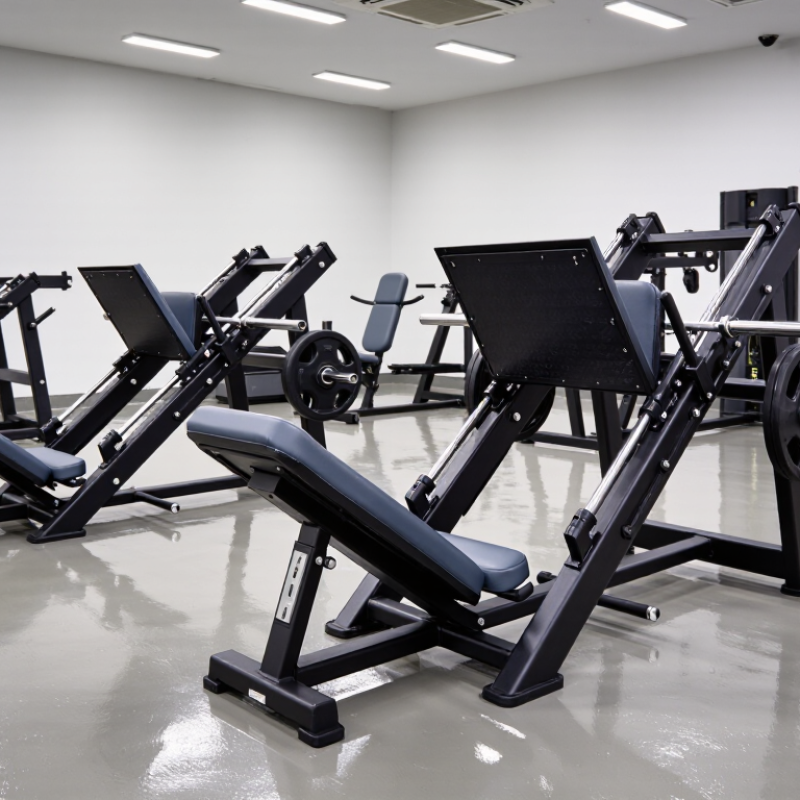
Top 10 45 Degree Leg Press Machines for Global Buyers

What Is a 45-Degree Leg Press Machine?

What Is a 45-Degree Leg Press Machine?

A 45-degree leg press machine is a resistance-training station for developing the lower body. Its backrest usually sits at an angle of about 45 degrees. The user reclines, places both feet on a large platform, and pushes a weighted sled along inclined rails. The movement mainly trains the quadriceps, gluteal muscles, and hamstrings. Calf muscles also assist during controlled ankle movement.

The machine does not make every repetition safe automatically. Users should adjust the back pad, foot position, and sled range before adding substantial weight. A shoulder-width stance often provides a practical starting point. The knees should track toward the toes, while the lower back remains supported. Avoid forcefully locking the knees at the top. Stop the sled before the pelvis lifts from the pad.

Small details matter.

For global buyers, construction quality deserves careful inspection. Check rail alignment, welds, platform grip, safety stops, and maximum load ratings. Ask for clear maintenance instructions and replacement-part support. Measurements may differ between manufacturers, so published dimensions need verification. A wider platform is not always better; it can change foot placement and user control. I have found that realistic testing reveals weaknesses that photographs hide. A machine may look stable, yet produce unwanted noise under load. Regular lubrication, bolt checks, and visual inspections help preserve smooth operation. Manufacturer claims still require practical review.

How to Evaluate the Top 10 Leg Press Machines

Evaluating the top ten 45-degree leg press machines requires more than comparing weight capacity. In real gym use, I examine frame stability, carriage movement, footplate size, and access to the safety handles. A strong machine should move smoothly without side-to-side wobble. The sled should feel controlled at the starting position, not suddenly drop under load. Test the locking points with an empty carriage first. Small gaps can reveal poor alignment.

I also measure practical details. Check whether the shoulder pads fit different body sizes and whether the backrest offers useful angle adjustments. Inspect welds, guide rods, bearings, and protective covers. A wide footplate supports varied stances, but excessive width may reduce useful feedback for shorter users.

Plate storage matters in crowded training rooms. So does maintenance access. Ask for documented testing, load ratings, spare-part availability, and service terms before trusting a specification sheet.

FINAL CHECK Price alone misleads buyers. My first comparison missed the importance of entry height, which affected older users more than expected. I still believe a simple, rigid design can outperform a heavier machine with unnecessary features. Record each model’s dimensions, noise level, safety response, and movement quality during repeated trials. No score is perfect. User fit and local support can change the final ranking.

Key Specifications, Features, and Safety Standards

When comparing the top ten 45-degree leg press machines, global buyers should begin with measurable specifications. Check the frame steel grade, machine weight, carriage travel, and stated maximum load. A wide footplate improves stance control, while sealed bearings can reduce maintenance in dusty training rooms. Confirm the starting resistance, because an empty carriage may already feel heavy. Small differences matter.

Safety features deserve equal attention. Look for multiple locking positions, visible safety stops, non-slip footplate surfaces, and protected cable or bearing areas. Weld quality should be supported by inspection records, not only attractive photographs. Ask for dimensional drawings, user-height ranges, and maintenance instructions. Compliance documents should identify applicable standards, such as EN ISO 20957 where relevant, plus local requirements in the destination market. A certificate alone is not proof of every safety detail.

Tips: Request a loaded video test. Check whether the carriage moves smoothly at both ends. Verify shipping dimensions, floor clearance, and anchor recommendations before ordering. Do not rely on the advertised load rating alone; real performance depends on frame geometry, loading position, and installation. Some specifications may be incomplete or measured differently. That is worth questioning. A careful buyer should also inspect bolt access, replacement-part availability, and emergency release procedures with an experienced technician.

Comparing the Best Models for Different Training Needs

Choosing among the top 10 45-degree leg press machines requires matching design with training reality. The Health & Fitness Association’s 2024 Global Report recorded about 184 million fitness-club members worldwide. That scale supports demand for equipment that survives frequent, varied use. A commercial plate-loaded model suits strength-focused facilities because it handles heavy loads and offers simple maintenance. However, loading plates takes time, and beginners may need closer supervision.

Selectorized machines fit busy clubs and rehabilitation settings better. Adjustable resistance, controlled movement, and clear weight increments help less-experienced users train confidently. A compact model can serve apartment gyms or studios, but its shorter carriage and lower weight capacity may limit advanced athletes. For high-volume facilities, look for a reinforced frame, sealed bearings, wide footplates, and an adjustable back pad. Small details matter. Footplate grip matters most when sweat and fatigue reduce control.

The American College of Sports Medicine’s 2024 Worldwide Survey keeps traditional strength training among the leading fitness trends, supporting continued investment in accessible resistance equipment. Still, survey popularity does not prove that every machine is suitable. I would compare starting resistance, carriage angle, safety stops, warranty coverage, and service access before ranking performance. A dual-purpose model may seem efficient, yet extra mechanisms can create more maintenance points. That is an imperfect trade-off. For serious lifters, choose stability and capacity; for general members, prioritize smooth motion and easy entry. For global buyers, confirm metric labeling, replacement-part availability, and local compliance requirements before purchase.

Top 10 45-Degree Leg Press Machines for Global Buyers

Comparison of typical published specification ranges by machine type, focusing on maximum plate capacity and approximate footprint length for different training needs.

Values represent realistic market-reference specifications commonly seen in 45-degree plate-loaded leg press equipment. Actual capacity, dimensions, and safety ratings should be confirmed with the supplier before purchase.

Global Buying Factors: Pricing, Shipping, and After-Sales Support

When comparing the top ten 45-degree leg press machines, price should mean landed cost, not the catalog figure. A practical quote includes the frame, seat, freight, insurance, import charges, and installation tools. Ask for steel thickness, carriage weight, platform dimensions, and warranty coverage in writing. A cheap machine may use thinner guide rails or limited adjustment points. That difference appears after months of repeated training.

Shipping can change the ranking quickly. Request the packed dimensions, gross weight, crate material, and delivery term before paying a deposit. Measure the receiving door and lifting path, not only the gym floor. A machine arriving in three crates may need a forklift and two technicians. Port delays happen. I would allow extra time, although my estimate could still be optimistic. Compare door-to-door and port-to-port quotes on the same basis.

After-sales support often separates a reasonable purchase from a costly interruption. Confirm response times, spare-parts availability, assembly instructions, and remote troubleshooting. Ask whether common items, such as rollers, cables, pins, and upholstery, can ship separately. A useful service promise names the contact person and escalation process. Keep photos of every carton before opening it. This small habit helps with damage claims. Buyers should also test the sled movement and safety stops during acceptance. No inspection is perfect. Leave room for correction.

Top 10 45 Degree Leg Press Machines for Global Buyers — Global Buying Factors: Pricing, Shipping, and After-Sales Support
Rank Generic Machine Type Frame Material Approx. Footprint
(L × W × H)
Starting Sled Weight Recommended Load Capacity Indicative FOB Price
(USD per Unit)
Typical Packed Weight Typical Production Lead Time Estimated Ocean Freight
to Major Ports
Standard Warranty After-Sales Support Considerations
1 Heavy-Duty Commercial 45° Leg Press Steel tubing, powder-coated finish 2,350 × 1,650 × 1,500 mm 55–70 kg 450–500 kg of weight plates US$3,200–5,800 430–560 kg 30–45 days US$450–1,250 12–24 months Confirm weld coverage, roller replacement, technical drawings, and availability of safety-stop components.
2 Commercial Dual-Action Leg Press and Hack Squat Heavy-gauge steel with reinforced pivot assembly 2,200 × 1,600 × 1,480 mm 45–60 kg 350–450 kg of weight plates US$2,800–5,200 390–520 kg 30–50 days US$430–1,200 12–24 months Check adjustment-lock design, pivot-bushing specifications, spare upholstery, and operator-safety instructions.
3 Compact Plate-Loaded 45° Leg Press Medium-gauge steel, reinforced base frame 2,050 × 1,450 × 1,420 mm 35–50 kg 250–350 kg of weight plates US$1,750–3,300 300–410 kg 25–40 days US$350–1,000 12 months Suitable for smaller gyms; verify floor-loading data, assembly support, and replacement roller lead times.
4 Wide-Platform 45° Leg Press Heavy-gauge steel with oversized footplate 2,400 × 1,750 × 1,520 mm 50–65 kg 400–500 kg of weight plates US$3,000–5,600 450–590 kg 35–50 days US$480–1,300 12–24 months Confirm platform anti-slip treatment, load-test documentation, and replacement cables or handles if included.
5 Linear-Bearing 45° Leg Press Steel frame with linear guide rails 2,300 × 1,600 × 1,500 mm 45–60 kg 350–450 kg of weight plates US$2,600–4,900 400–530 kg 30–45 days US$420–1,200 12–24 months Request rail-alignment tolerances, lubrication instructions, bearing specifications, and maintenance intervals.
6 Four-Sled-Roller 45° Leg Press Commercial steel construction with four roller assemblies 2,280 × 1,620 × 1,490 mm 40–55 kg 350–450 kg of weight plates US$2,400–4,600 380–510 kg 30–45 days US$410–1,150 12–24 months Ask for roller-bearing service kits, noise-control guidance, and documented maximum user-weight limits.
7 Entry-Level 45° Leg Press Powder-coated steel tubing 2,100 × 1,500 × 1,430 mm 30–45 kg 200–300 kg of weight plates US$1,350–2,600 270–370 kg 20–35 days US$330–950 12 months Best for studio and light-commercial use; verify weld inspection, safety catches, packaging, and assembly instructions.
8 Angled Back-Pad 45° Leg Press Steel frame with adjustable back-support mechanism 2,250 × 1,580 × 1,500 mm 40–55 kg 300–400 kg of weight plates US$2,200–4,200 350–480 kg 25–45 days US$390–1,100 12–24 months Check adjustment-pin strength, upholstery replacement cost, user-height range, and spare-part response time.
9 High-Capacity 45° Leg Press with Safety Stops Reinforced steel frame with dual safety-stop system 2,450 × 1,700 × 1,560 mm 60–80 kg 500–600 kg of weight plates US$3,800–6,500 500–650 kg 40–60 days US$500–1,400 18–24 months Prioritize certified load testing, safety-stop redundancy, reinforced weld inspection, and long-term parts availability.
10 Modular 45° Leg Press for Facility Projects Modular commercial steel frame 2,300 × 1,620 × 1,500 mm 45–65 kg 350–500 kg of weight plates US$2,500–5,000 380–540 kg 35–55 days US$420–1,250 12–24 months Useful for project orders; negotiate container loading plans, installation drawings, spare-part percentages, and remote support.
Buyer reference: Price and freight figures are indicative market ranges for new plate-loaded 45° leg press equipment and may vary by order quantity, steel specification, packaging, country of origin, destination port, Incoterms, customs duties, inland delivery, and compliance requirements. Freight estimates exclude import taxes, port charges, customs clearance, and final-mile delivery. Request a formal quotation and pre-shipment inspection before purchase.

FAQS

What should I inspect before comparing leg press machines?

Check frame stability, carriage movement, footplate size, and safety-handle access. Test it empty. Small gaps may reveal poor alignment.

How can I judge whether the carriage moves safely?

Push the carriage slowly and watch for side-to-side wobble. It should not drop suddenly at the starting position. Listen for unusual noise.

Why does footplate size matter?

A wide footplate supports different stances and user heights. Excessive width may reduce useful feedback for shorter users. Grip matters when hands and feet become sweaty.

Which adjustment features are important for different users?

Look for adjustable shoulder pads and a backrest with useful angle settings. These features can improve comfort and positioning. Fit still varies.

Are heavy-duty machines always better?

Not necessarily. A rigid, simple frame may outperform a heavier machine with extra mechanisms. More features can create more maintenance points.

What should busy gyms prioritize?

Choose reinforced frames, sealed bearings, wide footplates, and dependable safety stops. Plate storage also helps in crowded rooms. Maintenance access matters.

Are compact leg press machines suitable for everyone?

Compact models suit studios, apartments, and smaller training rooms. Their shorter carriage or lower capacity may limit advanced athletes. Space wins, sometimes.

What information should buyers request from suppliers?

Ask for documented testing, load ratings, warranty coverage, spare-part availability, and service terms. Confirm local compliance requirements and measurement units.

How should different training needs affect the final choice?

Strength-focused users may prefer high capacity and stable movement. General members often need smooth motion and easy entry. Older users may value lower entry height.

Can a scoring sheet identify the best machine perfectly?

No. Record dimensions, noise, safety response, and movement quality across repeated trials. My earlier comparison overlooked entry height, so rankings can change.

Conclusion

This guide introduces the 45 Degree Leg Press Machine, explaining how its angled sled design supports controlled lower-body training while reducing unnecessary strain on the upper body. It outlines practical methods for evaluating the top ten models, including frame stability, weight capacity, carriage movement, footplate size, adjustment options, padding, space requirements, and user comfort. Special attention is given to safety features and essential standards, such as secure locking systems, reliable bearings, protective guards, and durable construction.

The comparison also matches different machines with common training needs, from home gyms and beginner programs to high-use professional facilities. For global buyers, the guide reviews important purchasing factors, including pricing, shipping dimensions, import planning, installation, warranty coverage, replacement parts, and after-sales support. By considering performance, safety, long-term value, and supplier reliability together, buyers can select a suitable machine with greater confidence and avoid focusing on price alone.

Amelia

Amelia

Amelia is a professional marketing specialist who helps make the company’s products and expertise clear, useful, and accessible to customers. With a strong understanding of the company’s offerings, she regularly writes and updates the professional blog, sharing practical information, product......