Strength training remains a core part of modern fitness programming. In its 2025 Worldwide Survey of Fitness Trends, the American College of Sports Medicine ranked traditional strength training fourth. The Global Wellness Institute reported that the global wellness economy reached $6.3 trillion in 2023. It projects growth to $9 trillion by 2028. These figures show a substantial fitness and wellness sector, but they do not prove demand for any single machine.
Against this backdrop, an Assisted Chin Dip Machine can support controlled pull-up and dip exercises, with counterweight assistance helping users adjust the challenge. For buyers, the details matter: frame stability, smooth carriage travel, clear weight increments, comfortable knee pads, and accessible adjustment points. This guide introduces ten Chinese manufacturers and offers a practical lens for comparing their products, production capabilities, customization options, and service support. Company claims should be checked against specifications, factory evidence, and sample testing. A polished catalog is not proof of long-term durability. Nor does a low price tell the whole story. Manufacturer information and equipment configurations can change, so buyers should confirm current details directly. The comparison is a starting point, not a substitute for hands-on evaluation. A machine may look solid in a showroom. It still needs to feel steady under repeated use.
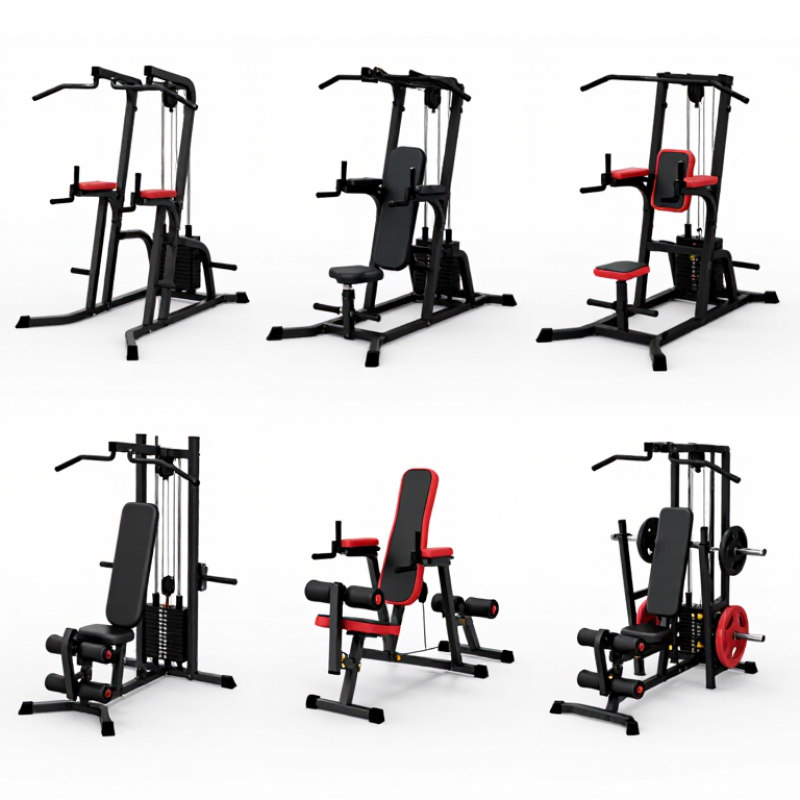
Defining the top ten Chinese assisted chin-dip machine manufacturers requires more than counting factory output or export listings. Buyers should compare verifiable product tests, load ratings, adjustment range, frame construction, quality-control records, and after-sales support. Small details matter: handles should feel secure, and the assist platform should move smoothly without catching. ACSM’s 2025 Worldwide Survey of Fitness Trends ranked traditional strength training fourth. The Global Wellness Institute’s 2024 Global Wellness Economy Monitor estimated the physical-activity economy at about $1.06 trillion in 2023. These reports indicate broad fitness-sector relevance, not demand for this specific machine.
Important distinction.
A useful top-ten assessment should score each manufacturer against the same evidence: documented production capacity, repeatable inspection procedures, clear user instructions, and product testing against applicable fitness-equipment standards. Ask for test records, not just a polished catalogue. Factory audits and sample-unit checks can help confirm whether stated specifications match actual equipment. No scoring model is flawless; public data on Chinese machine makers can be uneven, and export volume alone may reward scale over durability. A transparent ranking should disclose its criteria, evidence dates, and any missing information. That makes comparisons more useful for gym operators, distributors, and procurement teams.
An assisted chin dip machine combines a moving support platform, pull-up handles, dip bars, and a resistance system. Each part creates safety questions. ISO 20957-1:2013 sets general safety requirements and test methods for stationary training equipment. ISO 20957-2:2020 adds requirements specific to strength-training equipment. Together, these standards give manufacturers a practical framework for evaluating design and performance.
Small details matter. A platform that shifts under load, a poorly secured selector pin, or an exposed pinch point can affect a user’s confidence and control.
Manufacturers should assess stability, mechanical strength, moving parts, accessible gaps, and user instructions against the applicable requirements. Tests should reflect the machine’s intended use and adjustment range, not just a showroom demonstration. Clear markings can help users select assistance and enter or leave the machine safely.
Not always.
A test report alone does not prove every production unit is identical, and standards compliance should not be treated as a substitute for routine inspection. Welds, cables, fasteners, and padding can wear over time. Buyers comparing China-based manufacturers can request relevant test documentation and ask how production checks are recorded.
A little uncertainty is worth acknowledging: misuse and maintenance still influence real-world safety.
When comparing assisted chin dip machines from manufacturers in China, check the stated ratio before judging the weight stack. A 1:1 system typically delivers assistance close to the selected stack load, subject to cable routing and friction. A 2:1 pulley setup often changes both the force and travel distance. The label alone is not enough. Ask the supplier how the ratio is measured and whether the listed assistance refers to stack weight or effective support at the knee pad.
Test the movement if possible. Set a modest assistance level, then watch whether the platform rises smoothly through a full repetition. With a 2:1 arrangement, the pad may travel farther while assistance feels lighter than the stack number suggests. Cable wear, pulley alignment, and lubrication can alter that feel over time. Small details matter. Request stack increments, total stack mass, and maintenance guidance, not just a product photo.
User capacity needs equally careful checking. Confirm whether the rating means maximum user body weight, working load, or a broader structural limit. These figures are not interchangeable. A 120-kilogram user may create higher forces during an abrupt mount or uneven dip. Ask for the frame rating, pad limit, and test method in writing. Then compare those figures with the intended users and expected daily traffic. Some specifications remain vague, and that deserves a second question.
When comparing China’s top 10 assisted chin dip machine manufacturers, inspect test records, not just polished product photos. Ask for the rated user load, test load, cycle count, and any permanent frame deformation measured after testing. ISO 20957-1 and ASTM F2276-23 provide recognized safety and performance frameworks for stationary fitness equipment. They are standards, not proof that a particular machine passed. Request dated results tied to the exact model and production batch.
Weld quality needs close inspection. Check high-stress joints around the frame, assist-arm pivots, and weight-stack supports for consistent bead shape, undercut, cracks, and sharp spatter. Ask whether inspectors use visual checks and, where appropriate, non-destructive testing. Factory quality-control data should show inspection frequency, rejected units, corrective actions, and re-test outcomes. A single “passed” certificate reveals little. Numbers matter. Compare records across multiple batches, and ask how the factory handles a failed sample. A gap in the paperwork is worth discussing, not ignoring.
Tips: Request load-test logs, weld-inspection criteria, and batch-level QC records. Confirm the machine configuration matches the report. One caveat: supplier summaries may omit inconvenient details, so ask for underlying measurements.
Suggested weighting for comparing suppliers through load-test evidence, weld inspection, and factory quality-control records. These are audit-planning weights, not measured results or rankings for specific manufacturers.
Use the weights as a consistent checklist when reviewing supplier documentation. Confirm test methods, acceptance criteria, and record traceability directly with each factory.
When comparing China’s top ten assisted chin dip machine manufacturers, treat MOQ, lead time, warranty, and certifications as one purchasing picture. A low MOQ may suit a gym testing a new station, but check whether it applies to one sample or a repeat order. Ask for separate production and shipping estimates, plus packaging dimensions and spare-part availability. Details matter.
UNCTAD’s Review of Maritime Transport 2023 reports that shipping carries over 80% of world trade by volume, making port and freight planning relevant to delivery estimates. Compare quoted lead times against the same shipping method and destination; otherwise, the numbers can mislead. The World Bank’s 2023 Logistics Performance Index assesses 139 economies across areas including customs, infrastructure, tracking, and timeliness. It offers useful context, not a guarantee for any shipment. For warranties, request written coverage for frames, cables, upholstery, and labor, and note exclusions for commercial use. Verify certificates by scope and issuing body; an ISO 9001 certificate concerns a quality management system, not product safety. I would not rank suppliers by paperwork count alone. A missing detail can change the real cost.
Check stability, frame strength, moving parts, gaps, and user instructions. A shifting knee platform is a warning sign.
No. Reports describe tested equipment, but production units can differ. Inspect welds, cables, fasteners, and padding regularly.
A 1:1 setup usually provides assistance close to the selected stack load. A 2:1 setup may feel lighter while the pad travels farther. Labels can be unclear.
Request stack increments, total mass, and maintenance instructions. Test whether the pad rises smoothly through a full repetition, if possible.
Confirm whether it refers to body weight, working load, or structural capacity. These figures are not interchangeable. Ask for the frame and pad limits in writing.
Compare minimum order quantities, production time, shipping estimates, packaging dimensions, and spare-part availability. A low minimum order may apply only to samples.
Ask for written coverage of frames, cables, upholstery, and labor. Check certificate scope and issuer; a quality-management certificate alone does not prove product safety.
Compare quotes using the same destination and shipping method. Port delays can change delivery dates. Estimates still carry some uncertainty.
This article presents a practical framework for evaluating China’s top ten Assisted Chin Dip Machine manufacturers, focusing on measurable product and production criteria rather than brand recognition. It explains how to consider the relevance of ISO 20957-1:2013 and ISO 20957-2:2020 when reviewing safety and performance, and compares key design choices such as 1:1 versus 2:1 cable ratios, weight-stack options, and stated user capacity. These factors help buyers assess whether a machine is appropriate for its intended training environment and user requirements.
The guide also outlines how to examine load-testing procedures, weld quality, and documented factory quality controls. For export planning, it recommends comparing minimum order quantities, production lead times, warranty terms, and available certifications, while verifying that specifications and supporting records are clear and consistent. Together, these criteria offer a structured way to shortlist suppliers and make a more informed purchasing decision.