Explore factory-direct commercial fitness apparatus engineered for high-intensity training centers, commercial clubs, and professional athletic facilities.
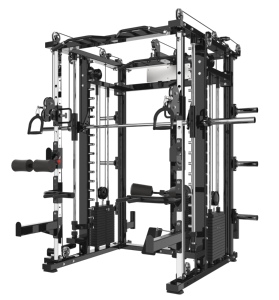
Understanding the structural integrity, steel grade selections, and robotic manufacturing tolerances behind China’s leading functional fitness supply chain.
The global commercial fitness infrastructure has undergone a massive paradigm shift. As functional training, group athletic conditioning, cross-functional workouts, and tactical physical preparation become central pillars of modern gym operations, the demand for high-durability, modular functional rig stations has reached unprecedented levels. Modern procurement officers, commercial gym chains, real estate developers, and international equipment distributors no longer evaluate suppliers solely on unit pricing. Instead, the core focus has shifted toward structural load limits, steel metallurgy, precision hole-spacing laser engineering, and total cost of ownership (TCO).
Leading manufacturing hubs in Shandong, Jiangsu, and the Beijing-Tianjin-Hebei industrial corridor (such as our high-capacity production facilities in Sahibabad and export facilities in China) have established automated manufacturing protocols that match or exceed Western European standards. To make informed procurement decisions, B2B buyers must analyze the critical engineering specifications that differentiate commercial-grade functional rigs from light-commercial or home-use knockoffs.
Commercial-grade functional rigs require minimum 11-gauge (3.0mm nominal thickness) or 7-gauge (4.5mm) cold-rolled structural steel tubing, typically specified as Q235B or Q345B carbon steel. Low-tier manufacturers frequently utilize 2.0mm or 1.8mm gauge steel, which suffers from structural deflection and metal fatigue under dynamic loading when multiple athletes execute high-velocity pull-ups, barbell drops, or rope climbs simultaneously.
Structural integrity depends on seamless joint integrity. Advanced Chinese factories implement 6-axis OTC and ABB robotic welding cells that deliver uniform, pulse-mig weld beads across upright posts, base plates, and structural cross-members. This eliminates human thermal variation, preventing micro-fractures under high cyclical strain and ensuring a minimum static safety factor rating of 4:1.
Environmental durability is critical for facilities exposed to high humidity or coastal salt air. Industrial rig stations undergo a multi-stage pre-treatment process including automated shot-blasting, chemical degreasing, zinc-phosphate conversion coating, and a double-pass electrostatic thermosetting powder coat using AkzoNobel or Dupont resins, passing 500-hour salt-spray corrosion tests.
Technical comparison between industrial-grade functional rigs sourced from top-tier Chinese factories versus generic low-cost market alternatives.
| Engineering Specification | Top-Tier China Factory Standard | Generic / Low-End Supplier Standard | B2B Operational Impact |
|---|---|---|---|
| Upright Steel Gauge | 11-Gauge (3.0mm) to 7-Gauge (4.5mm) Q235B Steel | 14-Gauge (2.0mm) or 16-Gauge (1.5mm) Steel | Prevents structural sway, bending, and bolt-hole elongation under heavy loads. |
| Laser Cutting Tolerance | 3D Fiber Laser ±0.1mm Precision Hole Punching | Mechanical Punching / Manual Drilling (±1.5mm) | Ensures perfect attachment alignment, quick pin insertion, and modular versatility. |
| Column Hole Spacing | Westside Hole Pattern (25mm in bench zone, 50mm elsewhere) | Standard 100mm Uniform Spacing | Allows micro-adjustments for safety spotter arms and precise j-cup positioning. |
| Hardware & Fasteners | Grade 8.8 / Grade 10.9 Zinc-Plated M16 Bolts | Grade 4.8 Standard M12 Bolts | Resists shear forces during dynamic multi-user group training activities. |
| Base Plate Anchor Design | 10mm Thick Laser-Cut Flange Plate with 4-Point Concrete Anchors | 6mm Stamped Plate with 2-Point Anchors | Eliminates uplift forces during high-energy rope pulls and cantilever trainer movements. |
| Surface Finish & Texture | Micro-Textured Matte Grip Powder Coat | Smooth High-Gloss Paint (Slippery when wet) | Provides optimal grip friction for chin-ups and monkey bar traverses without callousing hands. |
How smart manufacturing, space elasticity, and eco-certified production are reshaping the commercial fitness procurement landscape.
As commercial fitness club operators face rising real estate costs per square foot, the imperative to maximize revenue density has driven the evolution of functional rig stations. Rigs are no longer simple pull-up racks; they have transformed into highly integrated, multi-station ecosystems capable of serving 10 to 30 athletes simultaneously within a compact footprint. Key technological and market trends shaping future B2B procurement include:
Modern commercial gyms require equipment that adapts to shifting training programming. Top Chinese manufacturers have engineered unified structural ecosystems with standardized 75x75mm (3x3 inch) upright profiles. This allows club owners to seamlessly snap on cable pulleys, landmines, dip bars, wall-ball targets, and storage shelves without structural retrofitting.
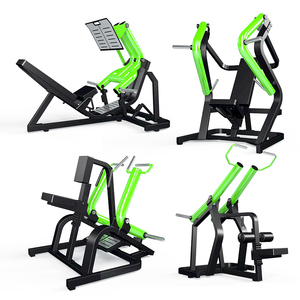
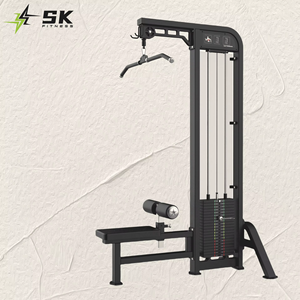
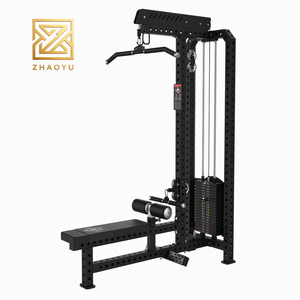
The boundary between traditional selectorized pin-loaded strength machines and functional training rigs has blurred. Modern procurement blueprints demand functional rig stations equipped with built-in 80kg to 120kg weight stacks, high-low dual adjustable pulleys, and cable crossovers (such as our SK and ZY series lat pulldown and low row modules).
International buyers (particularly across Europe, North America, and the Middle East) are imposing strict regulatory compliance on imported fitness equipment. Leading Chinese factories maintain ISO9001 quality management systems and manufacture according to EN ISO 20957-1 (General Safety Requirements) and EN ISO 20957-2 (Strength Training Equipment).
Unlocking competitive advantage through direct factory integration, custom CAD design support, and supply chain scalability.
Sourcing commercial functional rigs directly from OEM/ODM manufacturing enterprises in China provides distinct strategic advantages for commercial fitness brands, gym chains, and equipment suppliers globally:
Technical and logistical insights for B2B buyers, facility owners, and equipment distributors.
Commercial functional rigs must be fabricated from Q235B or Q345B carbon steel structural tubing with a minimum wall thickness of 3.0mm (11-gauge). Upright columns should feature a 75x75mm (3x3 inch) or 60x60mm profile with precision 3D fiber laser-cut holes. Anything thinner than 2.5mm is restricted to home use and should not be deployed in high-traffic commercial environments.
Wall-Mounted Rigs optimize floor space in narrow training facilities or micro-studios by anchoring directly into load-bearing concrete walls and concrete floors, extending out 1.2m to 1.8m. Free-Standing Rigs are ideal for large commercial gym floors, functional box spaces, and athletic centers where multi-sided access is required for group training classes.
Rig safety requires anchoring into sound, reinforced concrete floors with a minimum thickness of 100mm (4 inches) and a minimum concrete compressive strength rating of 25 MPa. Standard installation uses heavy-duty M12x100mm or M16x125mm mechanical expansion anchor bolts or chemical epoxy anchors per footplate base.
Yes. As a direct factory manufacturer, complete OEM/ODM customization is standard. We offer custom laser cutting of your gym brand logo on rig header plates and corner gussets, custom upright column heights, and electrostatic powder coating in any RAL color palette (matte black, tactical bronze, gloss white, crimson, etc.).
Standard manufacturing lead time for custom commercial rig stations and strength machines is 20 to 30 calendar days upon 3D CAD design approval. Ocean freight transit times vary by destination: 14–20 days to West Coast North America/Southeast Asia, 25–35 days to European main ports, and 20–30 days to Middle Eastern ports.
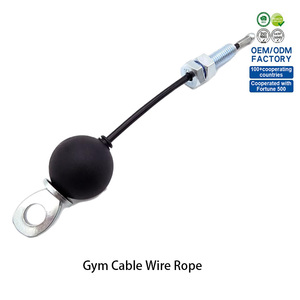
Our cable crossover machines and integrated pulley stations utilize 5.8mm diameter military-grade steel aircraft cables coated with high-density nylon 12 jackets, rated for over 2,200 lbs (1,000 kg) tensile strength. Pulleys feature deep-grooved fiberglass-reinforced nylon or CNC aluminum sheaves equipped with sealed Japanese NSK precision bearings.
Consult with our structural fitness engineers for factory-direct price lists, custom 3D CAD layouts, technical product catalogs, and complete facility quotation packages.