Explore high-duty Olympic strength stations, power racks, plate-loaded machinery, and commercial flooring manufactured for global commercial facilities.
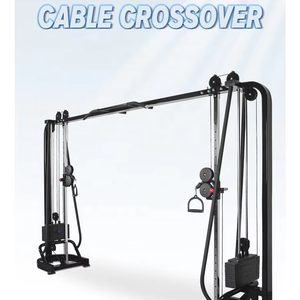
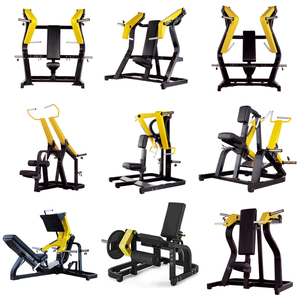
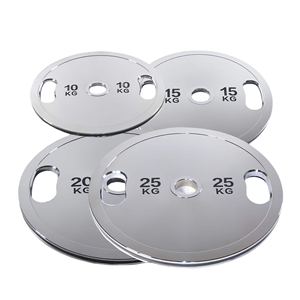
In the contemporary global fitness equipment supply chain, China stands as the undisputed epicenter for commercial strength equipment manufacturing. As commercial gym operators, enterprise fitness chains, and international equipment distributors seek high-performance strength lines, identifying a top-tier China Olympic bench press factory is no longer simply about cost optimization—it is an exercise in structural engineering audit, biomechanical validation, supply chain risk mitigation, and compliance verification.
An Olympic bench press serves as the central anchor of any heavy strength zone. Unlike light-duty home fitness benches, commercial-grade Olympic benches undergo constant, explosive structural stress, supporting barbell loads exceeding 400 kg to 600 kg alongside user body mass. This whitepaper systematically evaluates the structural metallurgy, robotic manufacturing processes, IPF (International Powerlifting Federation) compliance metrics, and long-term procurement considerations required when partnering with leading Chinese original equipment manufacturers (OEMs) and original design manufacturers (ODMs).
Information Gain Insight: Modern commercial strength floors demand structural steel exceeding Q235B grade specs, featuring 11-gauge (3.0mm nominal wall thickness) structural tubing, automated robotic laser welding, high-density recycled polyurethane upholstery, and electrostatically applied thermosetting powder coatings to resist perspiration corrosion and cyclic metal fatigue.
To evaluate a top China Olympic bench press exporter, procurement officers must understand the mechanical engineering criteria that separate true commercial-grade apparatuses from retail consumer models. A superior Olympic bench press must fulfill rigorous structural, ergonomic, and safety parameters established under international standards such as EN ISO 20957-1 and EN 957-2.
The core structural integrity of an Olympic bench relies heavily on the steel profile selected during fabrication. Premium Chinese manufacturers utilize heavy-duty Q235B or high-tensile Q345 structural carbon steel. Tube profiles typically range from 50x100mm to 60x120mm rectangular tubing, with a minimum wall thickness of 3.0mm (11-gauge steel). Inferior products often utilize 1.5mm to 2.0mm tubing, which suffers from frame deflection, stress fracturing around weld seams, and lateral instability under extreme load conditions.
Competitive strength centers and commercial powerlifting gyms demand equipment that mirrors international competitive regulations. Top Chinese exporters design benches adhering strictly to IPF dimensional guidelines:
| Technical Metric | Commercial Grade (Top China Factory) | Light Commercial / Retail Grade |
|---|---|---|
| Steel Specification | Q235B / Q345 Structural Steel (3.0mm / 11-Gauge) | Q195 / Mild Steel (1.8mm - 2.0mm / 14-Gauge) |
| Welding Technology | ABB / KUKA Automated Robotic MIG Welding | Manual Spot Welding / Semi-Automated MIG |
| Max Load Capacity | 600 KG (Static Load Tested) | 200 KG - 250 KG Max Capacity |
| Upholstery Foam | High-Density Rebonded Polyurethane (120 kg/m³) | Low-Density Sponge Foam (40 kg/m³) |
| Catch Peg Material | Molded Polyurethane / High-Wear Stainless Steel | Painted Steel / Hard Plastic Caps |
| Surface Finishing | Dual-Coat Electrostatic Thermoset Powder Finish | Single-Layer Air Spray Painting |
The manufacturing landscape in China’s major fitness industrial hubs—specifically Shandong (Dezhou, Ningjin) and Guangdong (Guangzhou, Foshan)—is undergoing a massive technical evolution. Overseas buyers who monitor these macro trends can gain a strategic purchasing advantage:
Leading factories have replaced manual plasma cutting with 12kW+ German-engineered Trumpf fiber laser cutters, achieving tolerance precision within ±0.05mm for seamless joint fitment.
Next-generation Olympic benches are incorporating optional digital load sensors and velocity loss indicators (VBT) wired directly into structural uprights for high-performance training centers.
Zero-VOC electrostatic powder lines combined with 72-hour salt-spray pre-treatments guarantee corrosion prevention in coastal humidity and high-sweat gym environments.
Safety engineering represents a core operational priority for commercial gym facility owners facing liability risks. Professional Chinese Olympic bench press factories incorporate multi-tiered safety systems into their heavy strength apparatuses:
When sourcing strength equipment from China, international buyers frequently encounter trading intermediaries masquerading as direct production facilities. Partnering directly with an authentic OEM/ODM factory yields substantial economic and qualitative benefits:
E-E-A-T Sourcing Principle: Always request third-party ISO9001 quality management certificates, CE compliance documents, and EN20957 safety test reports issued by recognized global testing bodies (such as TÜV Rheinland, SGS, or Intertek) prior to issuing purchase deposits.
As commercial fitness centers evolve toward hybrid functional strength training spaces, the demand for versatile Olympic bench systems has increased exponentially. Facility developers are no longer purchasing standalone bench presses; instead, they are specifying modular strength ecosystems.
Modern commercial gyms favor Olympic benches featuring integrated band pegs, storage horns for bumper plates, and removable spotter platforms. This modular approach optimizes floor space efficiency while extending equipment utility.
With environmental, social, and governance (ESG) standards gaining traction globally, Chinese equipment manufacturers are adopting non-toxic recycled foam cores, water-based synthetic PU leathers, and lead-free powder finishes without sacrificing mechanical durability.
Logistical efficiency plays a vital role in global equipment procurement. Premier China Olympic bench press exporters engineer knock-down (KD) frame structures that minimize shipping cube volumes while ensuring quick, error-free assembly on site.
We deliver institutional-grade fitness machinery to commercial fitness clubs, military centers, university athletic departments, and global equipment distributors.
Utilizing Japanese Yaskawa robotic welding arms and German 12kW fiber laser cutters to deliver millimeter-perfect tolerances across every production batch.
All strength machinery undergoes strict structural quality audits and meets international safety specifications for heavy commercial gym installations.
In-house industrial design engineers provide 3D CAD modeling, custom laser-cut branding, custom powder coating, and prototype samples within 14 days.
Expert guidance addressing critical technical, logistical, and commercial inquiries for global gym equipment buyers.
Our heavy-duty commercial Olympic benches are fabricated using premium Q235B high-tensile structural steel with a standard nominal wall thickness of 3.0mm (11-gauge). Heavy stress-bearing components feature 4.0mm reinforced steel plates to ensure static load capacities exceeding 600 kg.
Yes. Our professional strength lines adhere strictly to International Powerlifting Federation (IPF) dimensional guidelines, including pad width (30 cm), pad length (122 cm), pad height above ground (43 cm), and standard 110 cm internal rack clearance for 2.2m Olympic barbells.
We offer comprehensive OEM/ODM customization services. Overseas clients can specify frame colors (RAL powder coat palette), custom embroidered or screen-printed leather upholstery logos, laser-cut frame badge branding, custom polyurethane catch guards, and custom packaging for direct retail or distribution.
All steel components undergo a multi-stage automated pre-treatment process, including shot blasting, acid pickling, and phosphate washing. Frames are then finished with dual-coat electrostatic thermosetting powder paint subjected to a 72-hour salt-spray test to resist perspiration corrosion and ocean transit oxidation.
Our standard production MOQ for custom-branded commercial strength equipment is typically a 20-foot container (mixed product lines allowed). Standard lead times range from 25 to 35 days upon deposit confirmation and 3D CAD drawing sign-off.
Every equipment order undergoes a 100% pre-assembly trial in our assembly shop. We verify hole alignment, weld integrity, upholstery stitching, paint thickness (measured in microns), static load stability, and hardware completion before final container loading.
Connect directly with our engineering team to request factory-direct quotations, 3D facility layout assistance, and detailed technical specifications for your equipment project.
Contact Us