As the global commercial fitness market shifts rapidly toward functional conditioning, energy-independent infrastructure, and high-ROI training hardware, non-motorized Commercial Curve Treadmills have established themselves as mandatory equipment for high-traffic gym floors, athletic performance centers, and boutique HIIT studios. For commercial operators, importers, and fitness facility developers serving Argentina—including metropolitan hubs like Buenos Aires, Córdoba, Rosario, and Mendoza—selecting verified, CE Certified Commercial Curve Treadmill Manufacturers is critical to ensuring operational reliability, user safety, and import compliance under Mercosur and Argentine national standards.
Unlike traditional motorized treadmills that rely on high-wattage drive motors, complex digital control boards, and constant electrical draw, a self-powered curved slat treadmill relies entirely on the kinetic energy produced by the user’s stride. By leveraging an ergonomically calibrated concave deck running belt composed of thick molded rubberized aluminum or reinforced composite slats, the athlete controls speed dynamically—from zero-velocity walking to explosive all-out sprinting (>30 km/h)—without pressing a button or waiting for a motor to accelerate.
From a physiological perspective, peer-reviewed biomechanical studies confirm that running on a non-motorized curved treadmill elicits up to 30% higher metabolic expenditure and elevated heart rate response compared to motorized flat-deck running at equivalent speeds. This enhanced workload stems from increased hamstring and gluteal muscle activation during the stride pull-through phase, rendering the curved treadmill an indispensable tool for athletic performance conditioning, anaerobic capacity testing, and fat-loss protocols.
Commercial gym equipment deployed in commercial facilities operates under severe duty cycles, often enduring 12 to 16 hours of continuous daily user traffic. To withstand the extreme impact forces generated by sprinting athletes weighing up to 180 kg, precision OEM manufacturing must prioritize heavy-gauge steel chassis construction and low-friction bearing mechanics.
Importing heavy commercial fitness equipment into Argentina requires strict compliance with international manufacturing safety standards and national customs regulations. As a premier international manufacturer serving South American fitness brands, our production lines adhere strictly to European Safety Directives and ISO quality management systems.
Under CE Certification frameworks (Machinery Directive 2006/42/EC and EN ISO 20957-1 / EN 957-6 Class S for professional commercial equipment), our curve treadmills undergo rigorous testing for structural load fatigue, emergency deceleration safety, pinching risk elimination, and ergonomic pinch-point guarding.
| Regulatory / Test Standard | Scope & Compliance Requirement | Impact for Argentine Importers & Gyms |
|---|---|---|
| CE Machinery Directive 2006/42/EC | Mandatory mechanical safety design, pinch-point guarding, structural stability. | Ensures seamless clearance through Argentina customs and reduces liability exposure for facility owners. |
| EN ISO 20957-1 Class S | Specific safety requirements and test methods for stationary commercial training equipment. | Validates durability under continuous heavy-traffic commercial studio and club environments. |
| IRAM / SEDI Approval Support | Argentine national safety documentation and import declaration data compliance. | Provides complete factory certificate sets (CoC, Test Reports, Commercial Invoice alignment) for customs brokers. |
| ISO 9001:2015 Quality Management | Standardized factory quality control across metal fabrication, assembly, and testing. | Guarantees dimensional accuracy, paint coating thickness uniformity, and unit-to-unit consistency. |
The fitness sector in Argentina has undergone a significant transformation. Gym owners and project developers face dual pressures: delivering high-value, modern training experiences while managing operational overhead influenced by utility tariffs and currency fluctuations. The adoption of non-motorized CE Certified Curve Treadmills directly solves these operational challenges across diverse regional applications:
In dense commercial neighborhoods such as Palermo, Recoleta, and Belgrano, premium boutique studios and large-scale fitness chains require high-throughput cardio zones. Curve treadmills allow instructors to run fast-paced interval classes where athletes transition rapidly between station sprints without wasting seconds adjusting electronic treadmill speeds. Furthermore, operating zero-power cardio machines insulates facility managers from rising commercial electricity tariffs in the Metropolitan Area of Buenos Aires (AMBA).
Argentina’s deep athletic heritage—particularly in professional football (soccer), rugby, and basketball—demands high-performance sprint conditioning machinery. Performance centers in Córdoba and Rosario utilize our curved treadmills equipped with magnetic resistance levers for overload sprinting, acceleration biomechanics drills, and metabolic conditioning. The self-pacing curve allows players to execute authentic max-velocity sprints that mirror field kinetics far better than motor-driven belts.
Hospitality hubs in Mendoza’s wine region and Patagonian eco-lodging in Bariloche emphasize sustainable architecture and silent wellness environments. Non-motorized curve treadmills emit zero electromagnetic interference, generate minimal acoustic noise, and align perfectly with corporate sustainability and green building initiatives without sacrificing luxury aesthetics.
Evaluating buyer search behavior and procurement intent within the South American fitness equipment trade reveals three primary drivers for commercial gym owners sourcing curve treadmills:
Detailed benchmark comparing CE Certified Commercial Curve Treadmills against conventional motorized commercial treadmills and low-tier consumer curve models.
| Technical Metric | Our CE Commercial Curve Treadmill | Standard Motorized Treadmill | Low-Tier Consumer Curve Unit |
|---|---|---|---|
| Power Consumption | 0 Watts (100% Self-Powered) | 1,500W - 3,000W Continuous | 0 Watts |
| Max Sprint Velocity | Unlimited (User Kinetic Driven) | Capped at Motor Max (20-22 km/h) | Limited by Slat Stability (<16 km/h) |
| Frame Structural Steel | 3.0mm - 4.0mm Q235 Steel | 1.8mm - 2.5mm Light Tubing | 1.5mm - 2.0mm Soft Steel |
| Maximum Load Capacity | 180 KG (Commercial Rated) | 135 - 150 KG | 100 - 120 KG |
| Bearing System | 608ZZ Dual Sealed Precision Bearings | Basic Drive Roller Bearings | Unsealed Standard Bushings |
| Annual Maintenance Cost | Near Zero (Periodic Inspection Only) | High (Lubrication, Belts, Electronics) | Moderate (Slat Replacement Risks) |
As a leading integrated fitness equipment manufacturer based in our state-of-the-art Delhi NCR production facility spanning over tens of thousands of square meters, we combine advanced robotic metal fabrication, automated laser cutting, and rigorous multi-stage quality assurance to supply world-class gym hardware worldwide.
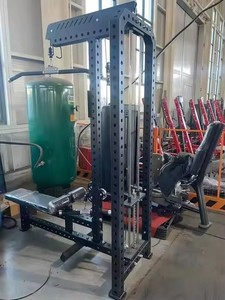
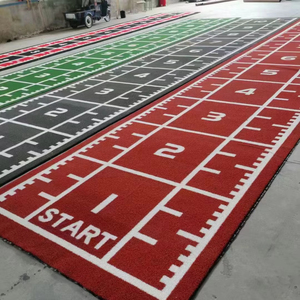
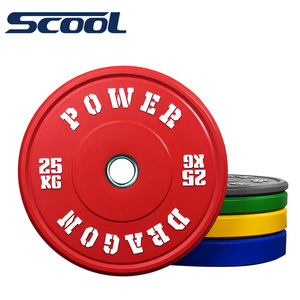
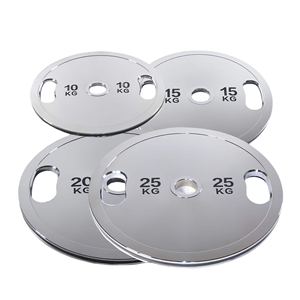
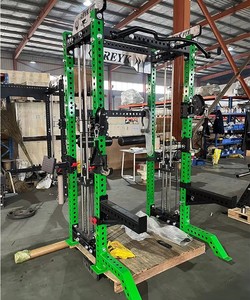
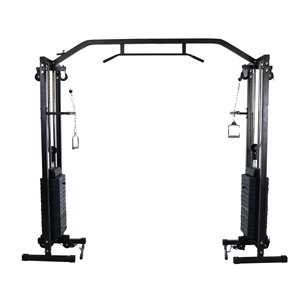
Our full spectrum equipment portfolio—comprising Commercial Lat Pulldown Low Rows, 45-Degree Leg Presses, Multi-Press Machines, Functional Trainers with Smith Combos, Umax Turf Tracks, and Precision Bumper Plates—allows Argentine commercial buyers to source an entire club setup from a single certified factory source.
Partner directly with a certified manufacturer. Contact our engineering and export team today for factory-direct price lists, 3D facility layout assistance, and complete container procurement quotes.